
A page that appears in Google Search moves through three stages, crawling, indexing, and serving, each with its own typical and worst-case timeline. Internal data shared at a three-day Search Central Live Deep Dive event in Europe gives site owners a clearer view of where delays occur along that pipeline.
What the new Google Search timeline data covers
The numbers came from an internal Google analysis presented at a three-day Search Central Live Deep Dive event in Europe, where attendees posted the slide breakdowns. Because crawling must complete before indexing finishes and indexing must be reflected before serving updates, a slowdown at any stage pushes back the rest of the pipeline.
Each process was given a fastest, a typical, and a slowest measurement drawn from the company’s own systems.
How long crawling takes in practice
For new URLs that Google has never seen before, the typical discovery time was around 20 hours, with the slowest cases stretching from weeks to never. Refreshes of known URLs typically took about 30 days, again with worst cases ranging from weeks to never.
Sitemap processing typically completed in around 24 hours, though low-quality sitemap processing could take up to 14 days or simply never happen. Updates to robots.txt were typically processed within 24 hours, with the slowest observed time at 25 hours.
Crawl capacity updates typically ranged from 4 hours to 1 to 2 weeks, with slowest times of 1 to 3 weeks during recovery. Crawl demand updates were typically around 20 hours, with slowest cases stretching from weeks to months. One specific warning from the analysis: crawl capacity can drop in seconds when Google backs off, for example when a server struggles to respond.
How long indexing takes in practice
Rendering typically took seconds, though pages could sit in the rendering queue for days to weeks at the slowest end. Meta annotations typically completed in 45 to 90 minutes, with slowest cases at 1 to 4 days. Link annotations ranged from minutes to 1 to 3 weeks typically, with the slowest cases measured in months.
End-to-end indexing, meaning all critical processes complete successfully, typically took about 1.5 hours, but slowest cases ranged from months to never when indexing had failed.
Removal of a page from the index typically took 1 to 3 weeks, with slowest cases measured in months. Canonicalization changes also typically took 1 to 3 weeks, with slowest cases stretching to months due to conflicting signals. Site moves typically took 1 to 3 months, with the slowest cases measured at 6 months to over a year, though a small site move could be done in a few weeks.
Structured data updates typically ranged from hours to 1 to 2 weeks, with slowest cases measured in weeks or never when structured data had failed. Image processing typically took hours to days, with slowest cases stretching from weeks to months. Video processing typically took hours to days, with slowest cases stretching from weeks to months for deep analysis.
How long serving changes take to appear
Removal served in Search Console by a site owner typically completed in about 2 hours, with a slowest case of 24 hours. Snippet updates and title updates both typically took 1 to 2 days, though slowest cases stretched from several weeks to months. Text result image updates typically took 1 to 2 weeks, with slowest cases also measured in several weeks to months.
Manual action removals typically took 1 to 2 weeks, with slowest cases of 4 to 6 weeks, or much longer for dormant sites. Core update changes typically took 3 to 6 months to recover, and slowest cases stretched to 6 months to a year, waiting for the next core update. Spam update changes typically took 1 to 2 weeks on a continuous basis, with slowest cases measured in months for batch refreshes.
Two rollout timings were also noted: core updates take 2 to 4 weeks to roll out, while spam updates roll out in 1 to 2 days.
What site owners should take from these numbers
The pattern across all three stages is the same: the typical case is fast, and the slowest case can be very slow, with quality, server performance, and conflicting signals all cited as drivers of delay. Care to stay within that range begins with keeping sitemaps clean, keeping robots.txt accurate, keeping server response stable, and keeping structured data valid.
FAQ
How long does Google crawling usually take?
Internal data presented at the Search Central event put typical discovery of a new URL at around 20 hours, with refreshes of known URLs around 30 days. Sitemap processing and robots.txt updates are typically around 24 hours, crawl capacity updates run 4 hours to 1 to 2 weeks, and crawl demand updates run around 20 hours. Crawl capacity can drop in seconds when Google backs off due to server strain.
How long does Google indexing take end to end?
The presentation put typical end to end indexing at about 1.5 hours, with rendering measured in seconds and hours spent in the queue, meta annotations at 45 to 90 minutes, and link annotations ranging from minutes to 1 to 3 weeks. Slowest case scenarios stretched to months, with removal, canonicalization changes, site moves, and structured data updates measured in weeks to over a year in some cases.
How long do Google Search serving changes take to show?
For owner-driven removals via Search Console, the typical time was about 2 hours. Snippet and title updates typically took 1 to 2 days, while text result image updates typically took 1 to 2 weeks. Manual action removals averaged 1 to 2 weeks, core update recoveries took 3 to 6 months, and spam updates rolled out in 1 to 2 days.
Related coverage
- Google AI Search Is Linking to Source Websites Again, Here’s What Changed – BizScoreAI
- Google’s AI Search Guide Isn’t Reassuring. It’s a Warning About Generic Content – BizScoreAI
- Google AI Mode vs AI Overviews: Study Reveals Divergent Search Behavior – BizScoreAI
SEOScanPro
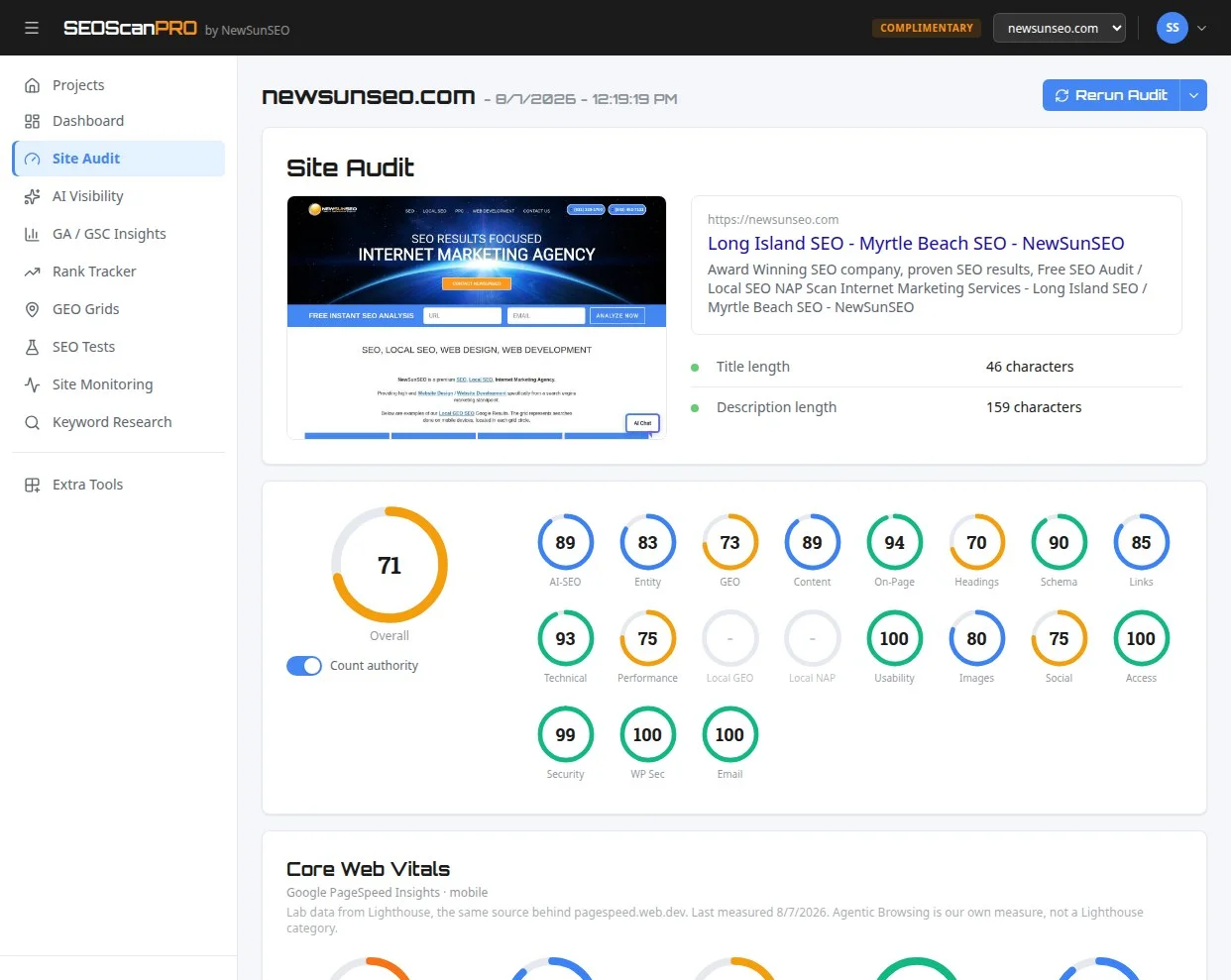
SEOScanPro’s site audit tool runs a full technical audit of a site and shows the measured result behind every check. Open the site audit tool.
This article summarizes reporting from seroundtable.com. See our editorial disclaimer for how our articles are produced.
Run a free scan to see your AI Visibility Score, SEO rating, and local citation accuracy.