
Searchers who ask one question and stop are no longer the rule; the follow-up query has become the most revealing signal of what a person actually needs. Brands that win visibility are the ones prepared to answer the next question and the proof that supports a decision, and optimizing for that arc is now a core part of SEO strategy.
What conversational search means
Conversational search lets a person ask a natural question, carry context into the next request, and refine the need as they go. It can happen in a search engine, an AI assistant, a voice interface, an on-site chatbot, a shopping assistant, or a visual search tool. Three qualities set it apart from conventional search:
- Context carries forward. A follow-up such as “What about one under $200?” only makes sense because the system remembers what “one” refers to.
- Intent can evolve as a single session moves a user from learning to comparing to buying.
- The format can change. A single journey can combine typed text, speech, images, video, maps, charts, and product feeds.
Not every voice query or AI summary is conversational. The defining question is whether the person can continue the task without rebuilding context from scratch.
A carry-on luggage example
A typical decision arc might look like this:
- Initial query: “What is the best carry-on for a five-day work trip?”
- Follow-up: “I need a laptop sleeve, and I fly budget airlines.”
- Visual turn: the user uploads a photo of a bag and asks whether it will fit.
- Decision turn: “Compare two options that are under $250.”
- Action turn: “Which choice can arrive by Friday?”
Traditional keyword research often stops at “best carry-on luggage.” Conversational strategy follows the full arc, including specifications, comparisons, images, policies, inventory, delivery data, and expert guidance.
How search became conversational
The shift toward conversational search predates AI assistants, built up over decades as user behavior gradually changed.
Keywords and reformulation
Early web search rewarded short noun phrases, often stripped of natural grammar. When results missed, users manually reformulated: “running shoes,” then “running shoes flat feet,” then “best stability running shoes women.” The user, not the engine, carried the context between searches, and SEO centered on keyword matching and landing pages built around primary phrases.
Semantic and contextual understanding
Search engines improved at understanding entities, relationships, intent, and natural phrasing. Google’s 2019 BERT announcement emphasized how the context of small words such as “to,” “for,” and “no” could change intent. For SEO, that reduced the value of repetitive exact-match language and increased the importance of satisfying the underlying need.
Voice and answer-first interfaces
Voice assistants normalized complete questions and concise spoken answers, and introduced situations where users speak hands-free while driving, cooking, or moving between rooms. Many voice interactions remained single-turn, but the lasting lesson for SEO was to write content that works when heard rather than read, with short sentences, plain language, and key facts stated early.
Complex and multimodal understanding
Google’s 2021 MUM announcement framed complex tasks as journeys that may require multiple searches. In 2022, Lens multisearch let people combine an image with text such as a color, attribute, or question. The direction was already clear: let people express their needs naturally while the system does more of the work behind the scenes.
What conversational search looks like now
One question can trigger many searches
Google says AI Overviews and AI Mode may use query fan-out, running multiple related searches across subtopics and data sources. A lawn care question may prompt research into treatment, prevention, safety, cost, climate, and timing. The visible prompt is not the whole story, and a page can support part of an answer even when it does not mirror the wording of the initial question.
Keyword datasets still reveal demand, but they only capture part of the picture. Support questions, on-site searches, reviews, sales conversations, and prompt testing expose the needs that come next.
Follow-ups turn results into journeys
Google has made the shift visible by connecting follow-up questions in AI Overviews to a continuing conversation in AI Mode, a behavior Google later pushed worldwide across desktop and mobile. ChatGPT search similarly blends conversational responses with timely web information and source links.
On a practical level, people reveal more with every turn:
- “Explain heat pumps.”
- “Would one work in a 1920s house?”
- “What if the electrical panel is only 100 amps?”
- “Estimate the trade-offs in Southern California.”
- “What should I ask contractors?”
Each question changes the best answer. A page that handles only the definition may serve the opening request and then disappear from the rest of the journey. The initial query identifies the topic, while the follow-ups reveal what truly matters: budget, risk, location, use case, or deadline.
Multimodal inputs make the conversation more natural
People no longer need to translate everything they see into keywords. They can point a system at an object, screen, plant, product, room, or broken part and ask a direct question. Google reported in May 2025 that Lens handles more than 25 billion queries per month, and Search Live has expanded that behavior by letting people discuss a live camera view and ask free-flowing follow-ups.
For brands, visual SEO cannot stop at filenames and alt text. The image or video has to be useful. Clear angles, close-ups, scale references, demonstrations, and transcripts help a person and a search system understand what the visual is meant to prove. A photograph showing exactly where a reset button sits on an appliance is more useful than a polished lifestyle image of the same appliance.
Search is moving closer to action
Conversational systems increasingly connect research with execution. Search experiences can already help with tickets, reservations, local appointments, shopping, and forms. As agentic capabilities grow, accurate availability, pricing, policies, product details, and accessible conversion paths become a larger part of discoverability. A great article cannot rescue inaccurate inventory or a broken booking flow.
The trust and click shift
A Pew Research Center study found that visits containing a Google AI summary resulted in a traditional result click 8% of the time, compared with 15% when no AI summary appeared. Links inside the summaries received clicks in only 1% of visits. One study cannot provide a universal CTR forecast, but the direction is clear. A brand can influence a decision without receiving the visit.
The clicks that remain may also represent a later, more qualified need. When an AI summary covers the basics, people need a stronger reason to click: verify a claim, see the original demonstration, use a tool, join a community, or check current availability. The click now means give me the proof, the experience, or the utility the summary cannot provide.
That dynamic elevates original reporting, testing, research, and firsthand experience. It raises the value of transparent authorship, methodology, dates, sources, and corrections. Calculators, datasets, templates, maps, and interactive tools become more useful, as do newsletters, saved lists, and communities that invite a return visit. Clear next actions that respect the person’s stage and risk level also gain weight. If an AI answer can repeat everything on a page, the page needs to offer something the summary cannot, like proof, experience, or utility.
The strategic shift: optimize the conversation, not just the keyword
Small adjustments make a difference. Listen more closely to follow-up questions, connect related needs across the audience journey, and make the best information easier to find, understand, trust, and use.
Map follow-up paths around real decisions
Walk through the questions a person is likely to ask after the first answer, and make sure the site or content system can serve each one with the format it needs. A definition page is rarely the only stop on the way to action.
Build topic systems rather than prompt pages
Connect related pages so that a definition, a comparison, a proof point, a calculator, and a next step can all surface when the conversation calls for them. Internal linking, structured data, and clear topical clusters help both people and retrieval systems navigate the network.
Make every key claim easy to verify
Dates, authors, sources, methodology, and corrections belong on the page where the claim lives, not buried in an about page. The next click often happens because the reader wanted proof.
Design for retrieval and reading
Clean structure, descriptive headings, and concise answers near the top of each section help both retrieval systems and hurried readers extract what they need without scrolling through filler.
Treat images and video as answer assets
A useful visual shows what the reader actually needs to see: where a part is, how a process unfolds, what a result looks like. Filenames, alt text, captions, and surrounding text should describe the same thing in plain language.
Create a strong next turn on owned surfaces
When a person lands on the site, the next step should be obvious. A related guide, a comparison, a calculator, a newsletter, or a tool gives the reader a reason to stay and a reason to come back directly.
Build authority people can remember
Original work, named authors, transparent sources, and a consistent point of view make a brand worth returning to. Those signals also help retrieval systems decide which pages to cite as the conversation evolves.
Conversational search is a cross-functional responsibility
SEO, content, product, design, and customer support all touch the conversation. When inventory data, booking flows, support answers, and on-page content stay in sync, the next question has a real answer waiting.
Measurement: a scorecard for conversational search
A more useful scorecard tracks how a brand appears across the full arc of a decision, from the opening question in AI Overview and AI Mode through the most common follow-ups.
- AI Overview and AI Mode presence for the opening question and the most common follow-ups.
- Citations and brand mentions in AI responses, including which sources the engines chose to quote.
- Engagement on the second and third pages of a session, not only the landing page.
- Assisted conversions from owned surfaces such as newsletters, tools, and communities.
- Accuracy of the structured data that drives availability, pricing, and policy answers.
- Quality of follow-up content measured by dwell time, scroll depth, and return visits.
SEOScanPro (https://seoscanpro.ai) measures the kind of visibility conversational search rewards, with rank tracking across a service area and AI visibility checks that show where a brand is cited and where it is missing.
What comes next
Search will keep moving from a list of links toward a guided exchange that ends in action, so the brands that benefit are the ones that treat the first question as the start of a conversation, not the end of an assignment, and that make the next question, the one after it, and the supporting proof count.
FAQ
What is conversational search?
Conversational search lets a person ask natural questions, carry context from one request to the next, and refine their need over time. It can happen in a search engine, AI assistant, voice interface, on-site chatbot, shopping assistant, or visual search tool, and it can combine text, speech, images, video, maps, charts, and product feeds.
How are follow-up queries changing SEO?
Follow-up queries reveal the budget, risk, location, use case, or deadline behind the original question. A page that handles only the definition may serve the opening request and then disappear from the rest of the journey, so SEO now needs to support the full decision arc, not just the first keyword.
How is click-through rate changing with AI summaries?
A Pew Research Center study found that visits containing a Google AI summary resulted in a traditional result click 8% of the time, compared with 15% when no AI summary appeared, and links inside the summaries received clicks in only 1% of visits. One study cannot provide a universal CTR forecast, but the direction is clear: fewer clicks, and the clicks that remain tend to be later, more qualified needs.
Related coverage
SEOScanPro
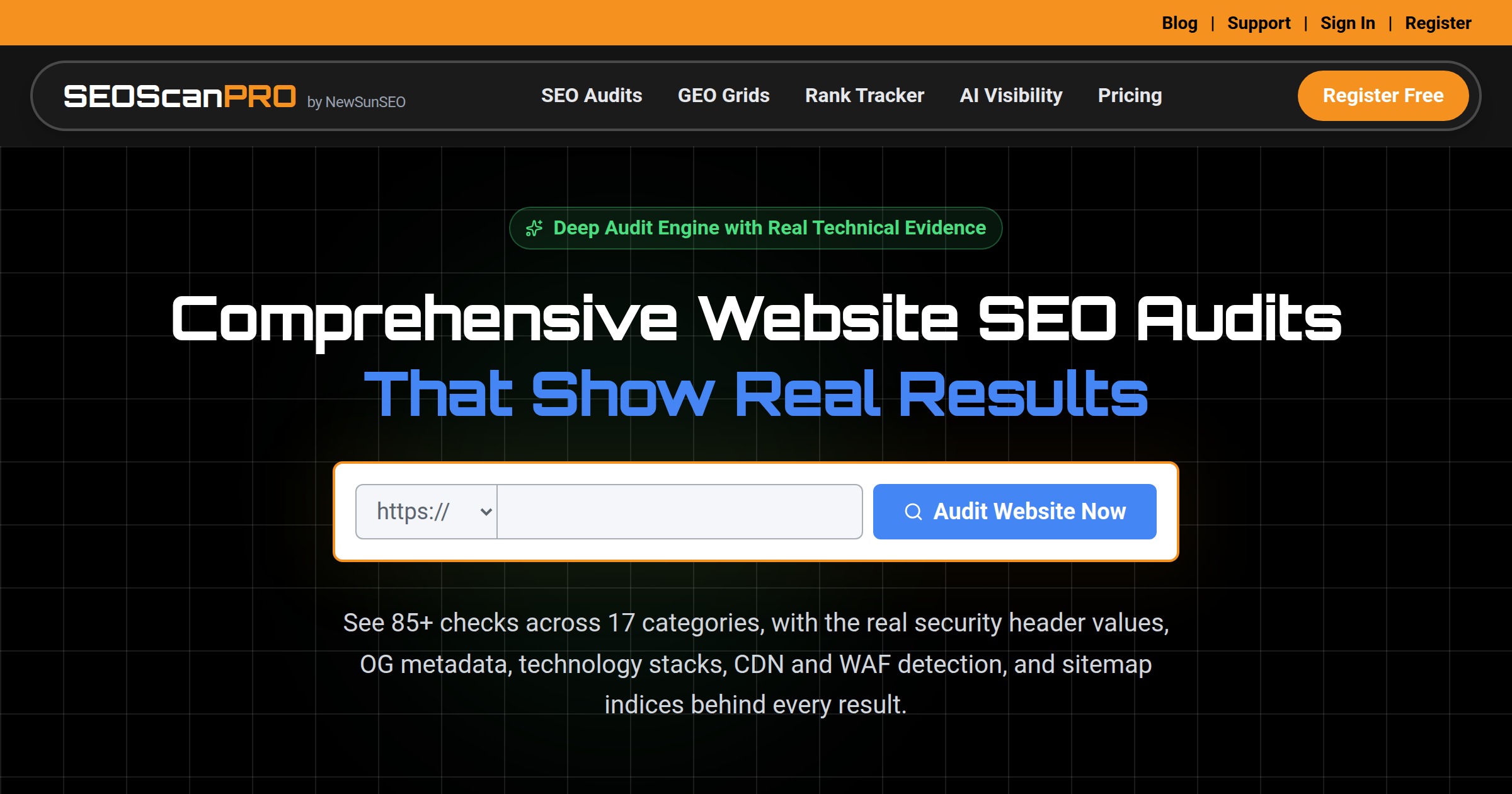
SEOScanPro’s AI visibility report runs a full technical audit of a site and shows the measured result behind every check. Open the AI visibility report.
This article summarizes reporting from searchengineland.com. See our editorial disclaimer for how our articles are produced.
Run a free scan to see your AI Visibility Score, SEO rating, and local citation accuracy.