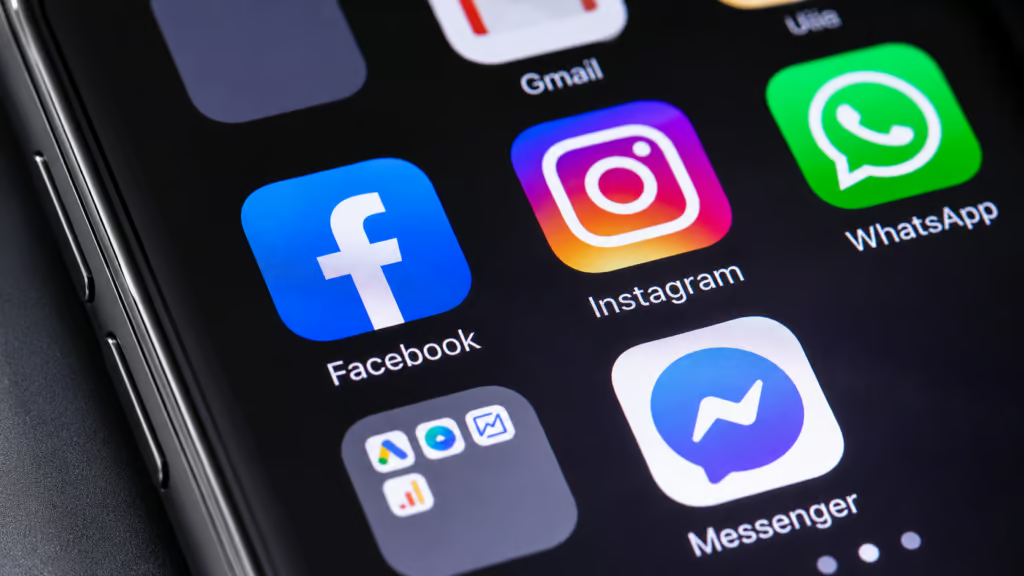
Meta launched an artificial intelligence image feature for Instagram on a Tuesday and pulled it by Friday, after a swift backlash from privacy advocates, a Hollywood union, and individual users who objected to the way the tool used people’s photos.
The feature, called Muse Image and produced by Meta Superintelligence Labs, was integrated into the Meta AI chatbot. It allowed users to mention a public Instagram account and generate new images based on that person’s photos. Meta released more than 30 new AI-powered effects for Instagram Stories alongside it.
Critics pointed out that the feature was turned on by default for users with public accounts. Anyone who did not want their photos used as raw material for AI-generated content had to find the setting and opt out manually.
How did SAG-AFTRA and privacy groups respond?
SAG-AFTRA, the union representing actors and media professionals, quickly urged members and other Instagram users to opt out. In a statement, the union said any approach other than a clear opt-in for these uses of Instagram users’ images was unacceptable and a misreading of public sentiment about the harms involved.
Actor Hannah Einbinder, an Emmy winner known for the series “Hacks,” publicly criticized the feature on Instagram, noting it had been turned on automatically and urging her followers to disable it.
Privacy International called the tool “the latest sign AI companies see people’s images and data as raw material to be exploited.” Donald Campbell, advocacy director at the tech justice nonprofit Foxglove, called the rollout an “obvious recipe of disaster,” citing a year of reported harms from nonconsensual AI-altered images on social platforms.
What were the fraud and exploitation concerns?
Researchers and advocates warned that the feature could enable fraud. Neal K. Shah, an NIH-funded caregiving researcher who runs the caregiving company CareYaya, told Fox Business that scammers had already used AI-generated videos and ads showing him endorsing supplements he had no connection to, with marketing claims about treating dementia. His followers had begun asking whether the endorsements were real.
“All of these older people have been scammed, and my image has been used to scam them, and I can’t do anything about it,” Shah said. He now warns viewers in his own videos not to trust ads appearing to show him selling products, and said he had reported the fakes to Meta repeatedly without a result.
Shah’s experience captures a broader concern: older audiences are often the easiest targets for fabricated endorsements, and they were never asked whether they wanted to live in a world where a stranger’s face could be borrowed to sell them a pill.
How did Meta respond to the backlash?
Before the rollback, a Meta spokesperson said the company had “built Muse Image with strong controls and safety guardrails from day one,” noting that private accounts and accounts belonging to minors were excluded and that adults could opt out “with just a couple clicks.”
After the backlash, Meta said its intent was to offer a useful creative tool while giving people control over whether their public content could be referenced in this way. The company said it had heard feedback that the feature “missed the mark” and confirmed it is no longer available.
SAG-AFTRA welcomed the move. A union spokesperson said that, given the well-known dangers of nonconsensual digital replicas, a feature that encouraged that behavior was unwise, and the company had done the responsible thing by discontinuing it.
Meta’s remaining AI creative tools remain in place, and the company has lost only a few days of favorable coverage. What should trouble users is the default: consent was not asked for, it was assumed, and buried in a settings menu most people would never open. Companies only relinquish that kind of advantage when enough people notice, which means the burden fell, as it usually does, on ordinary users defending a right they should never have had to claw back.
Related coverage
Run a free scan to see your AI Visibility Score, SEO rating, and local citation accuracy.