Quick Answer
Meta is re-evaluating its 2030 net-zero emissions goal and related interim targets after its carbon footprint rose nearly 40% between 2024 and 2025, with total emissions reaching more than 21.7 million metric tons of carbon dioxide equivalent. The company also reported sharply higher water consumption related to purchased electricity.
Why Is Meta Reconsidering Its Net-Zero Goal?
Meta said in its November 19, 2026 sustainability report that AI infrastructure demand grew faster than almost anyone projected. The company is reviewing its timelines, sequencing, interim milestones, the 2030 net-zero target, and its near-term emissions-intensity targets.
According to Rachel Peterson, Meta vice president of data centers, and Blair Swedeen, Meta global head of net zero and sustainability, “our long-term ambitions haven’t changed, but our operating environment has.” They also wrote that Meta is re-evaluating its targets to reflect current operating realities while reporting progress each year.
Meta’s review comes as Amazon, Google, and Microsoft have retained their original sustainability goals, although all four companies have acknowledged the difficulty of balancing those goals with rapid data center construction. The companies have continued expanding AI facilities that in some cases rely on natural gas for electricity, even as they invest in renewable energy projects.
How Much Did Meta’s Emissions Increase?
Meta reported that total emissions rose from 15.6 million metric tons of carbon dioxide equivalent in 2024 to more than 21.7 million metric tons in 2025. That represents a nearly 40% increase in one year.
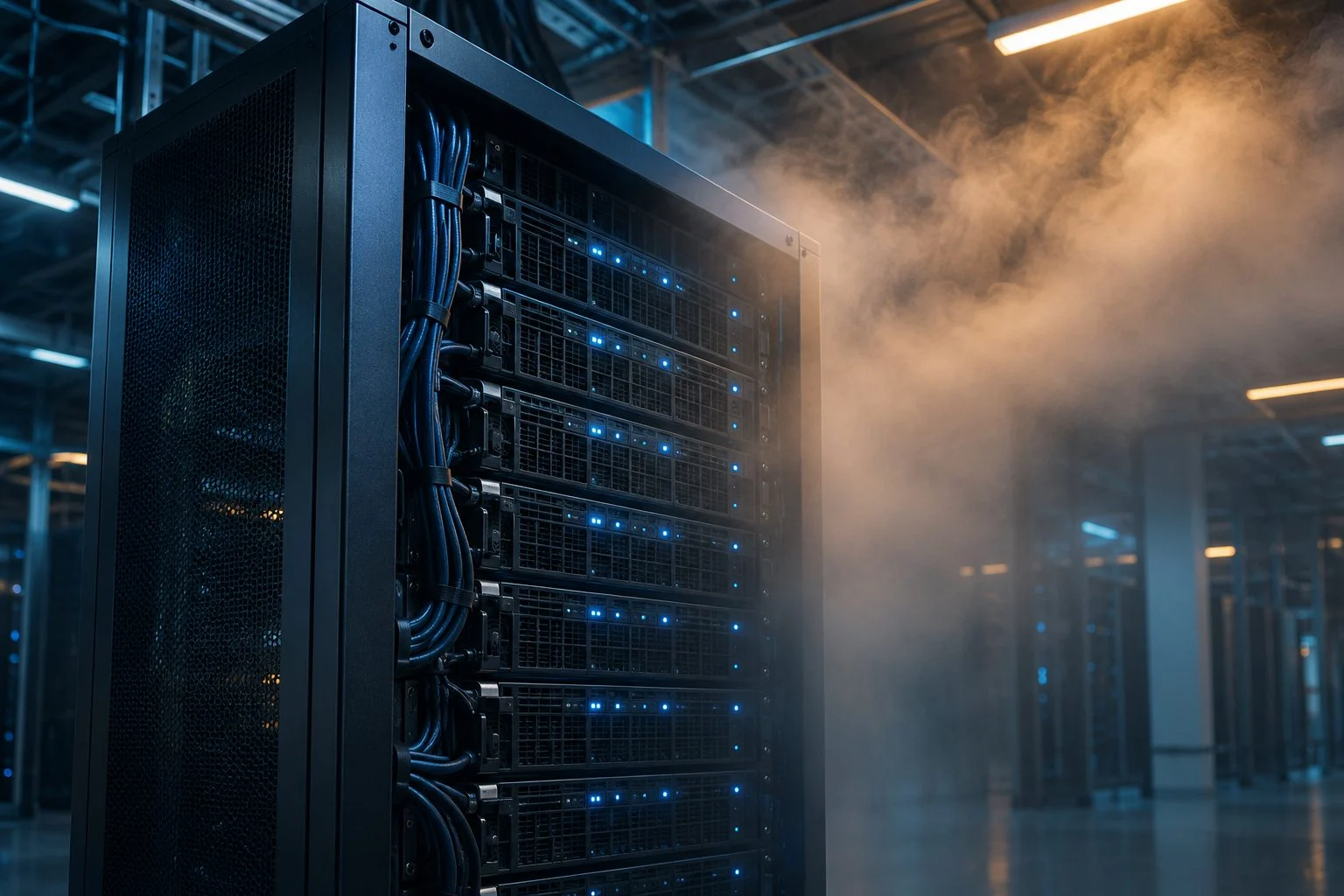
Meta attributed much of the increase to capital goods, including data center servers. Its percentage increase was the highest among the four large US technology companies included in the report’s comparison:
- Meta: nearly 40% increase
- Microsoft: 25% increase
- Google: 18% increase
- Amazon: 16% increase
Meta still has one of the smallest total carbon footprints among the four companies. The scale of its annual footprint was roughly comparable to Idaho’s total emissions and above the totals reported for Hawaii, Maine, South Dakota, and New Hampshire.
The U.S. Energy Information Administration’s 2024 state data put Idaho’s energy-related carbon dioxide emissions at 21.1 million metric tons, compared with 18 million for Hawaii, 16 million for Maine, 15.1 million for South Dakota, and 13.6 million for New Hampshire. Those state estimates cover carbon dioxide from fossil-fuel energy consumption and use a different measurement from Meta’s company-wide emissions.
What Does the Evidence Show About Data Center Energy Use?
A November 2026 study led by the Harvard T.H. Chan School of Public Health and the Harvard Data Science Initiative estimated that 403 US hyperscale data centers used between 68 and 99 terawatt-hours of electricity from May 2024 through April 2025, depending on operating conditions. The researchers associated that electricity use with about 25.7 million metric tons of carbon dioxide, or approximately 1.8% of total US electricity consumption during the study period.
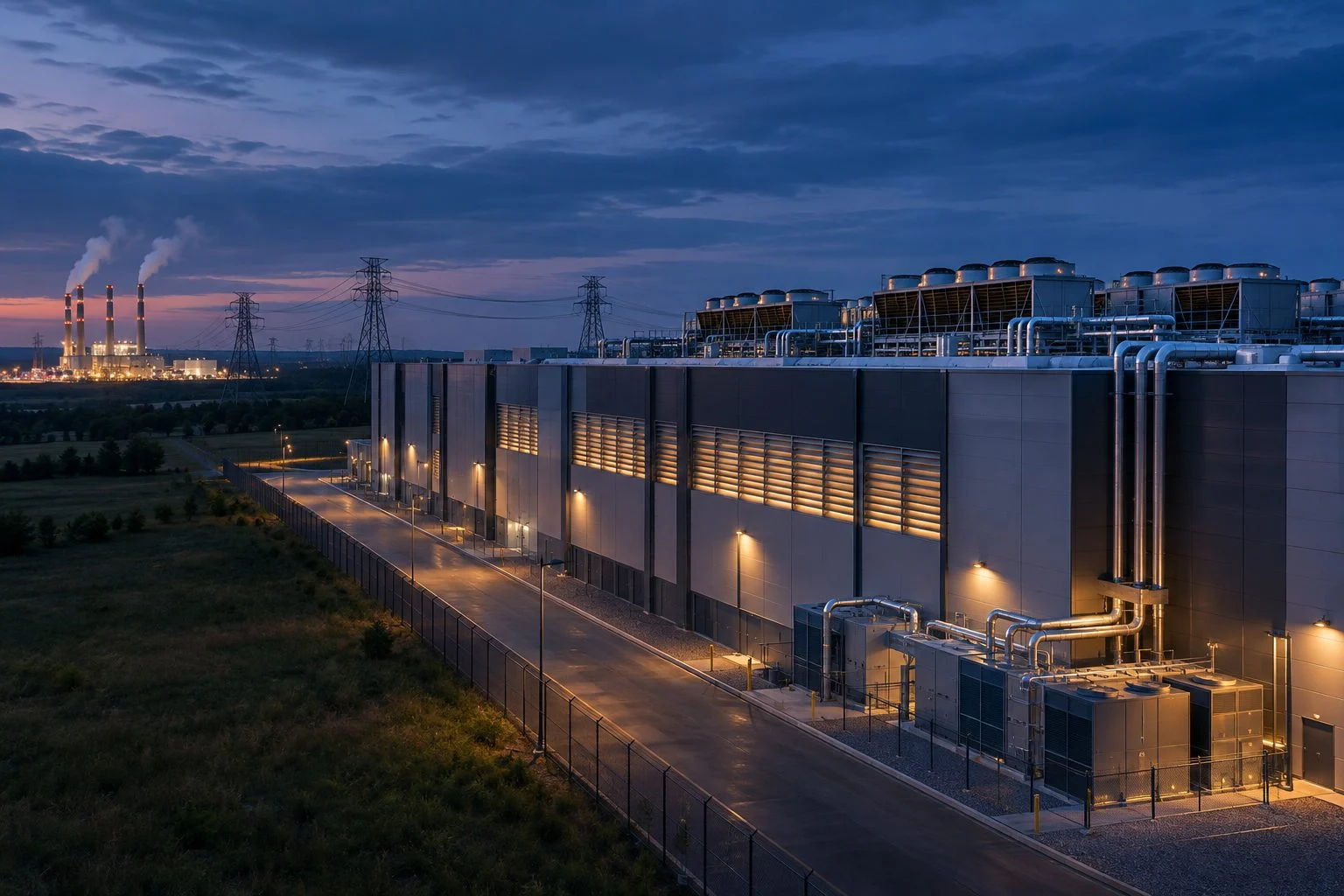
The study, published in Nature Sustainability, found that about 54% of the electricity serving those facilities came from fossil fuels, including 38% from natural gas and 15% from coal. It also found substantial regional differences, with about a quarter of the facilities located in grid regions with above-average carbon intensity.
An earlier study by Harvard researchers examined 2,132 US data centers operating from September 2023 through August 2024. It estimated that data centers consumed more than 4% of US electricity, generated more than 105 million tons of carbon dioxide equivalent, and had carbon intensity 48% above the national average.
Harvard researchers said the later hyperscale study provides a facility-level snapshot of a rapidly expanding industry and that electricity demand and emissions may already be higher in 2026 than they were during the May 2024 to April 2025 measurement period.
Microsoft Emissions Increase and Northern Virginia Data Center Boom
Microsoft’s 2025 emissions increase was driven primarily by the expansion of its datacenter infrastructure. Purchased-energy emissions accounted for 13 percent of Microsoft’s total emissions. The report covered the fiscal year that ended in June 2025.
Northern Virginia’s data center boom in 2024 included over 25 million square feet of data centers in operation and much more under development. Regional data-center power capacity was nearly 2.7 gigawatts in 2022. Approved but unbuilt data centers had estimated capacity needs of 23.4 gigawatts, equivalent to 5.8 million homes. Amazon announced an additional $35 billion investment in Virginia.
How Did Meta’s Water Use Change?
Meta’s direct facility water consumption fell from 825 million gallons in 2024 to 790 million gallons in 2025. Consumption in areas identified as experiencing water stress moved in the opposite direction, rising from 198 million gallons to 246 million gallons.
Water associated with purchased electricity increased more sharply, from 19 billion gallons in 2024 to more than 26 billion gallons in 2025. This measure includes water consumed by power generation connected to purchased electricity, rather than only water used inside data center facilities for cooling.
Meta was described by Data Center Dynamics as the only hyperscaler reporting indirect water use. The company’s disclosure matters as more data centers adopt closed-loop cooling systems that use less water at the facility but require additional electricity.
What Does This Mean for Business Visibility and Trust?
Assess how your business appears in online search and AI-generated answers.
Research from the Harvard T.H. Chan School of Public Health shows that hyperscale data centers draw substantial electricity and produce measurable carbon emissions. Yale School of the Environment experts also describe local concerns involving electricity demand, water consumption, urban heat, and community opposition to proposed facilities.
For a business owner monitoring how brands appear across online search and AI results, BizScoreAI provides business listing and AI-visibility measurement, including an AI Scan that tests how an AI agent finds and reads a website.
Key Considerations
- Meta says its long-term ambitions have not changed, but it is reviewing the 2030 target and interim milestones.
- The 2026 sustainability report covers a year in which Meta’s emissions increased nearly 40% and net emissions increased 45%.
- Facility water consumption declined, while water consumption in water-stressed areas and water tied to purchased electricity increased.
- Harvard research provides estimates for different data center populations and periods, so its totals should not be treated as a direct measure of Meta alone.
- Check how your business appears across online search and AI-generated answers.
What to Do Now
- Review how your business appears in online search and AI-generated answers.
- Check the consistency of your business information across relevant directories.
- Measure your current AI visibility before making changes to your listing or website.
- Record any changes you make and compare the results over time.
FAQ
Is Meta Abandoning Its 2030 Net-Zero Emissions Goal?
Meta says it is re-evaluating its timelines, sequencing, interim milestones, the 2030 timeframe for its net-zero goal, and its near-term intensity targets. The company says its long-term ambitions have not changed.
Why Is Meta Reconsidering Its Sustainability Targets?
Meta attributes the review to faster-than-projected growth in demand for AI infrastructure and says it is updating its approach to reflect current operating conditions.
How Much Did Meta’s Total Emissions Rise in 2025?
Meta’s total emissions increased from 15.6 million metric tons of carbon dioxide equivalent in 2024 to more than 21.7 million metric tons in 2025, a rise of nearly 40%.
Did Meta Reduce Its Water Consumption in 2025?
Direct facility consumption fell from 825 million gallons in 2024 to 790 million gallons in 2025. Consumption in areas with water stress rose from 198 million gallons to 246 million gallons, while water related to purchased electricity increased from 19 billion gallons to more than 26 billion gallons.
How Much Electricity Did Hyperscale Data Centers Use in the Harvard Study?
The study estimated that 403 US hyperscale data centers used between 68 and 99 terawatt-hours from May 2024 through April 2025, depending on operating conditions. About 54% of their electricity came from fossil fuels.
Related Coverage
- Datacentres to Create 70% More Carbon Emissions by 2030, IEA Report Warns (November 20, 2026): The International Energy Agency expects global datacentre electricity consumption to double by 2030, with AI accounting for three-quarters of the increase and sector carbon emissions rising by 70%.
- Vantage Data Center Generators Spark Noise Revolt in Virginia Town – BizScoreAI
- AI Drives a Sharp Rise in Data Center Water Use
Try the business directory

BizScoreAI scores how visible a business is to AI search and shows what its listing looks like to the engines people ask. Open the business directory.
Sources
See our editorial disclaimer for how our articles are produced.
Run a free scan to see your AI Visibility Score, SEO rating, and local citation accuracy.