
The SEO priorities that win organic traffic
Organic traffic in 2025 rewards sites that earn visibility through three reinforcing areas: a technically healthy site that search engines can crawl and render, content that satisfies the searcher’s intent behind a query, and authority signals that point other reputable sources to the page. Treat each area as a separate audit track and the gains stack on top of each other rather than cancel out.
Why a fast, crawlable site is the foundation
Search engines rank pages they can reach, render, and understand without friction. That means server response times, a clean URL structure, a logical internal link graph, and XML sitemaps that reflect the pages you actually want indexed. A page that loads slowly or sits behind a chain of redirects burns crawl budget before it ever competes for a keyword.
Core Web Vitals and real-user performance
Core Web Vitals measure how a real visitor experiences a page: Largest Contentful Paint for loading speed, Interaction to Next Paint for responsiveness, and Cumulative Layout Shift for visual stability. Improving these metrics usually moves rankings because the same fixes that help users also help crawlers.
Crawl budget and indexable URLs
Every site has a finite crawl budget. Parameterised URLs, faceted navigation, thin tag pages, and soft 404s all spend it without returning value. A regular crawl with a tool like Screaming Frog surfaces the waste so it can be blocked, canonicalised, or rewritten.
Content that matches intent wins the click and the stay
Rankings follow intent. A page that promises an answer and then delivers it with structure, original data, and on-topic coverage holds attention and earns links. A page that repeats the query and pads it out loses both.
Topical depth over thin posts
A single comprehensive guide on a subject consistently outperforms a cluster of shallow posts on the same keyword. Topical depth means covering the subquestions a searcher has once they land: definitions, comparisons, how-tos, and the edge cases that show subject-matter experience.
Original data and first-hand experience
Pages that include original research, surveys, or screenshots of a process carry a signal that aggregated posts cannot. First-hand experience also protects against generic AI-generated content, which has pushed Google to weight E-E-A-T (experience, expertise, authoritativeness, and trustworthiness) more heavily.
Authority signals still move the needle
Backlinks from relevant, reputable sites remain a strong trust signal in 2025. Digital PR, original data campaigns, and partnerships with industry publications earn links that aggregators cannot replicate.
Internal linking as a control lever
Internal links decide which pages the crawler treats as important. Linking from high-authority pages to the ones you want to rank passes equity and clarifies the site’s information architecture. Audit orphan pages quarterly and add contextual links from related content.
Brand mentions and entity signals
Unlinked brand mentions and consistent author and organisation schema feed entity recognition. Search engines increasingly resolve entities rather than just keywords, so a stable name, address, and author profile across the web reinforces the entity graph around your site.
How to sequence the work
Run technical and indexation work first so new and updated content gets crawled quickly. Layer content production on top so the site gains pages with intent-matching depth. Close the loop with authority building: outreach, digital PR, and partnerships that earn editorial links back to the cornerstone content.
Measuring what matters
Track indexable page count, crawl stats in search console, organic impressions and clicks by query, and the referring domain growth of cornerstone pages. Rankings move slowly; these leading indicators show the work is landing months before revenue follows.
FAQ
What is the single biggest SEO priority for organic traffic in 2025?
Match content to search intent with topical depth. Pages that fully answer the query and cover its subquestions hold attention, earn links, and rank more durably than thin posts built around a single keyword.
Do Core Web Vitals still affect rankings?
Yes. Core Web Vitals measure real-user loading, interactivity, and visual stability. Improving Largest Contentful Paint, Interaction to Next Paint, and Cumulative Layout Shift helps both visitors and crawlers.
How do you build SEO authority quickly?
Earn editorial backlinks through original data, digital PR, and partnerships with reputable industry publications. Strengthen internal linking from high-authority pages to cornerstone content so link equity flows where it counts.
SEOScanPro
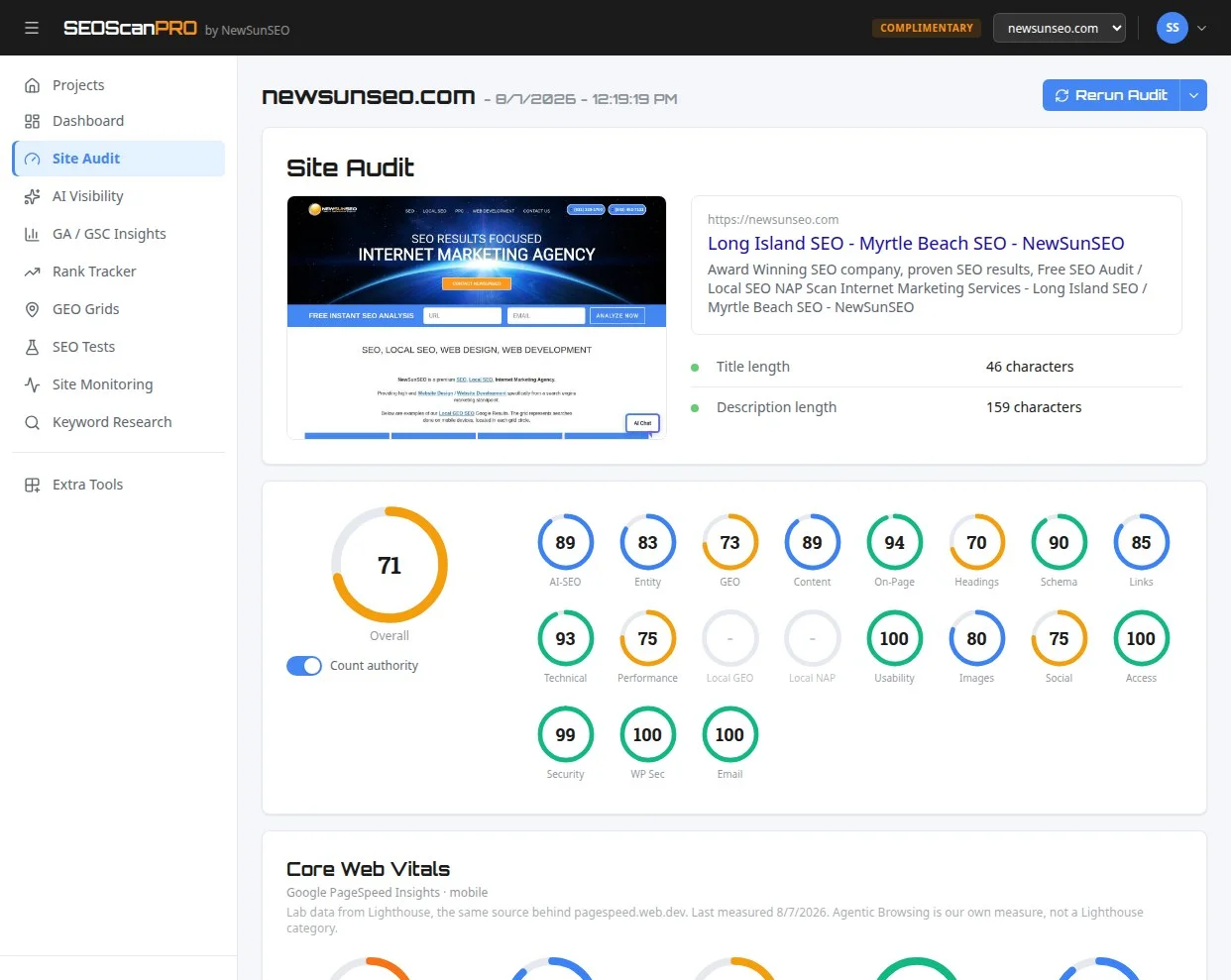
SEOScanPro has the site audit tool runs a full technical audit of a site and shows the measured result behind every check. Open the site audit tool.
This article summarizes reporting from searchengineland.com. See our editorial disclaimer for how our articles are produced.
Run a free scan to see your AI Visibility Score, SEO rating, and local citation accuracy.