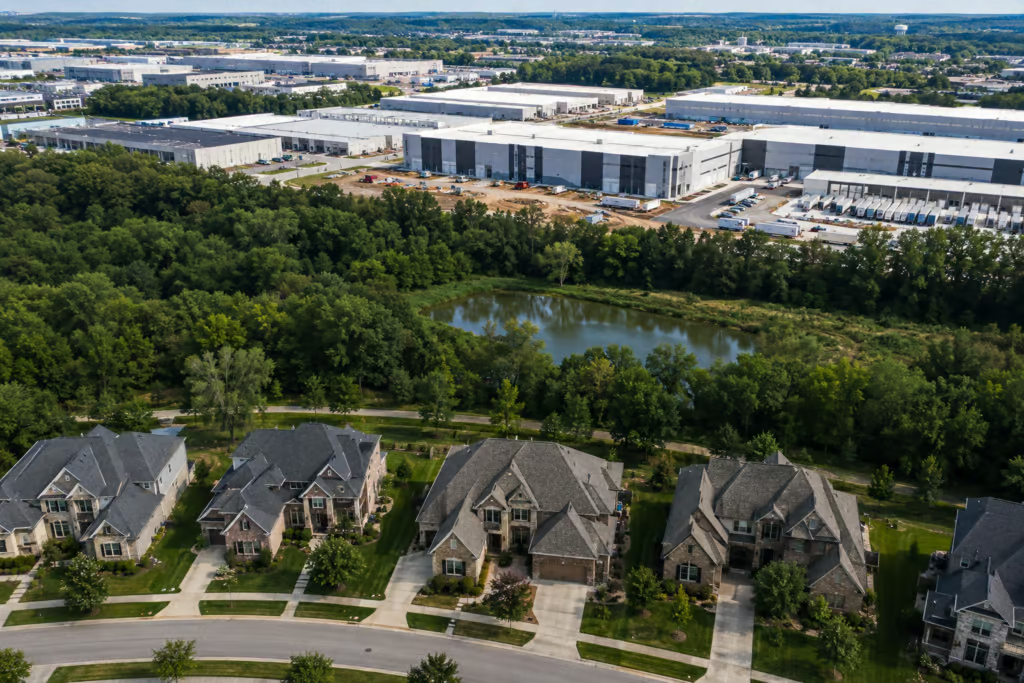
A new Gallup survey reports that 71% of Americans are somewhat or strongly opposed to the construction of artificial intelligence data centers in their local communities, a level of resistance that exceeds opposition to nearby nuclear power plants. Only 53% of respondents said they would oppose a nuclear plant near them, even though more than one-third of the U.S. population lives or works within 50 miles of an operating reactor. The findings, released on Wednesday, suggest that concerns about the environmental footprint of AI facilities now outweigh long-standing anxieties about nuclear energy.
What is driving the opposition?
Seventy percent of those surveyed said they were worried to some degree about the environmental impact of data centers, which are known for their high electricity and water consumption. Other respondents pointed to quality-of-life concerns, economic worries, and general unease about AI itself.
Support for nearby data centers is small: only 7% said they strongly favor building one in their area, with another 20% somewhat in favor. Those supporters cited expected benefits such as job creation, tax revenue, and broader economic growth.
Opposition cuts across most major demographic and political lines, with women and Democrats much more likely than Republicans to say they strongly oppose local data center construction.
Why are AI data centers different from earlier facilities?
Data centers are not new, but the demands of training modern AI models have changed their scale. Before AI, typical data centers spanned roughly 100,000 square feet and supported internet businesses and cloud computing. New AI-focused megacampuses can cover millions of square feet and hundreds of acres, housing hundreds of thousands of graphics processing units. Their combined energy needs for computing, cooling, and storage can rival those of hundreds of thousands of households.
Construction is concentrated in states such as Texas, Virginia, and Georgia, with major projects underway from OpenAI, Oracle, SoftBank, Amazon, and Microsoft.
How are water and resource concerns factoring in?
Large data centers can consume around five million gallons of water per day, an amount comparable to the usage of a town with a population of 10,000 to 50,000. Half of the respondents who opposed local data centers cited resource concerns, including excessive water use, high energy demand, and the loss of farmland or wildlife habitat.
Nearly a quarter pointed to quality-of-life issues, particularly higher utility bills and a general rise in the cost of living. Other worries included noise, light pollution, air and water quality, and broader concerns about AI ethics, job stability, and a lack of industry regulation.
How is this tension playing out in northern Nevada?
Roughly 50,000 residents of Lake Tahoe have been told that NV Energy will stop providing them with electricity in 2027. According to a Fortune report, the utility plans to redirect that power to data centers in northern Nevada, one of the fastest-growing data center corridors in the country, where Google, Microsoft, and Apple have built or announced facilities. Affected residents have until next May to secure a new electricity provider.
FAQ
What did the Gallup poll find about local AI data centers?
The Gallup poll found that 71% of Americans are somewhat or strongly opposed to the construction of AI data centers in their local communities, compared with 53% who would oppose a nearby nuclear power plant.
Why are Americans opposed to nearby data centers?
Seventy percent of respondents cited environmental worries, including high electricity and water consumption. Half of those opposed pointed to resource concerns such as excessive water use, high energy demand, and loss of farmland or wildlife habitat, while nearly a quarter cited quality-of-life issues like higher utility bills and rising costs of living.
How large are the new AI data center campuses?
Before AI, typical data centers spanned roughly 100,000 square feet. New AI-focused megacampuses can cover millions of square feet and hundreds of acres, house hundreds of thousands of graphics processing units, and use energy comparable to hundreds of thousands of households. Large facilities can also consume around five million gallons of water per day.
Related coverage
Run a free scan to see your AI Visibility Score, SEO rating, and local citation accuracy.