
Bing is running a search result layout test that drops the site name from the snippet and shows only the page URL instead. The change keeps the title and description in place while removing the branded site label that normally sits above or below the link.
What changed in the Bing snippet layout
In the standard Bing layout, each result displays a visible site name above or below the title, often with a favicon next to it. The test version removes that site name line. What remains is the page title, the URL, and the description snippet. The URL still shows the domain, so users can still tell which site the result comes from, but the site name as a separate text element is gone.
A side-by-side comparison makes the difference clear: one screenshot shows the familiar layout with a site name and favicon attached to each entry, while the other shows the same query with only the bare URL in that spot.
Why Bing is trying a layout Google already tested
Microsoft did not invent the idea. Google ran a similar test about a year ago, stripping the site name from its own search snippets to see how users reacted. Bing’s test mirrors that direction, which suggests both engines are still searching for the cleanest possible result presentation.
The motivation is likely visual density. Snippets with site names take up more vertical space, and removing them gives more room for featured snippets, AI overviews, and ad units above the organic results. It also produces a more uniform look across results, since not every site has a clean, recognizable brand name to display.
What this means for SEO and site owners
For most sites, the impact will be small. Searchers can still see the domain in the URL and can still recognize a familiar brand from the page title. The branded site name was a reinforcement, not the only signal of who was publishing the page.
There are a few practical considerations worth tracking:
- Brand visibility drops slightly. Without a site name line, a well-known publisher loses a small piece of free real estate in the SERP.
- Click-through rate may shift. A/B tests like this typically measure CTR differences, so Bing is watching whether removing the site name changes how often users click.
- Schema markup is unaffected. The site name comes from the publisher entity on the page, not from a special snippet tag, so structured data does not need changes.
- Tracking matters. If Bing rolls the test out broadly, CTR from Bing in analytics tools may move, and that change will be caused by the layout, not by anything the site owner did.
For businesses that depend on branded search traffic from Bing, the safe move is to keep brand signals strong across the page itself: clear author bylines, organization schema, and consistent naming on About and Contact pages. That way, even if the site name line disappears from the snippet, the brand is still easy to recognize from the URL and title.
How to keep an eye on the test
Layout tests like this usually appear for a small slice of users and queries before any wider rollout. The fastest way to spot it is to run branded and non-branded searches on Bing from a logged-out browser and compare the SERP against what colleagues see. If a result shows only a URL where a site name normally sits, that account is in the test bucket.
For SEO teams that want to track how a site’s snippet actually looks across many queries, an audit tool can capture the live SERP and flag layout differences. SEOScanPro’s comprehensive website audit pulls live search results and shows exactly how a page appears in Bing and Google, which makes layout changes like this easy to confirm.
Will Bing actually ship the change?
Tests do not always become defaults. Google’s version ran as a limited experiment and was not pushed live as a permanent redesign. Bing’s outcome will depend on the engagement metrics the test produces: if click patterns hold steady or improve, there is a real chance the layout becomes standard. If CTR drops or users appear confused, Microsoft will likely keep the site name where it has been for years.
Either way, the test is a useful signal that both major search engines are actively experimenting with how much branding belongs in the organic result, and that the answer is still being decided.
FAQ
What is Bing testing in its search result snippets?
Bing is testing a layout that removes the site name from search result snippets and shows only the page URL in its place. The page title and description remain unchanged.
Did Google test something similar?
Yes. Google ran a comparable test about a year ago, removing site names from its own search snippets to measure user response.
Does removing the site name affect SEO?
The change is cosmetic and does not affect rankings. It may reduce the visible brand footprint in the SERP slightly, but the domain in the URL and the page title still identify the source.
SEOScanPro
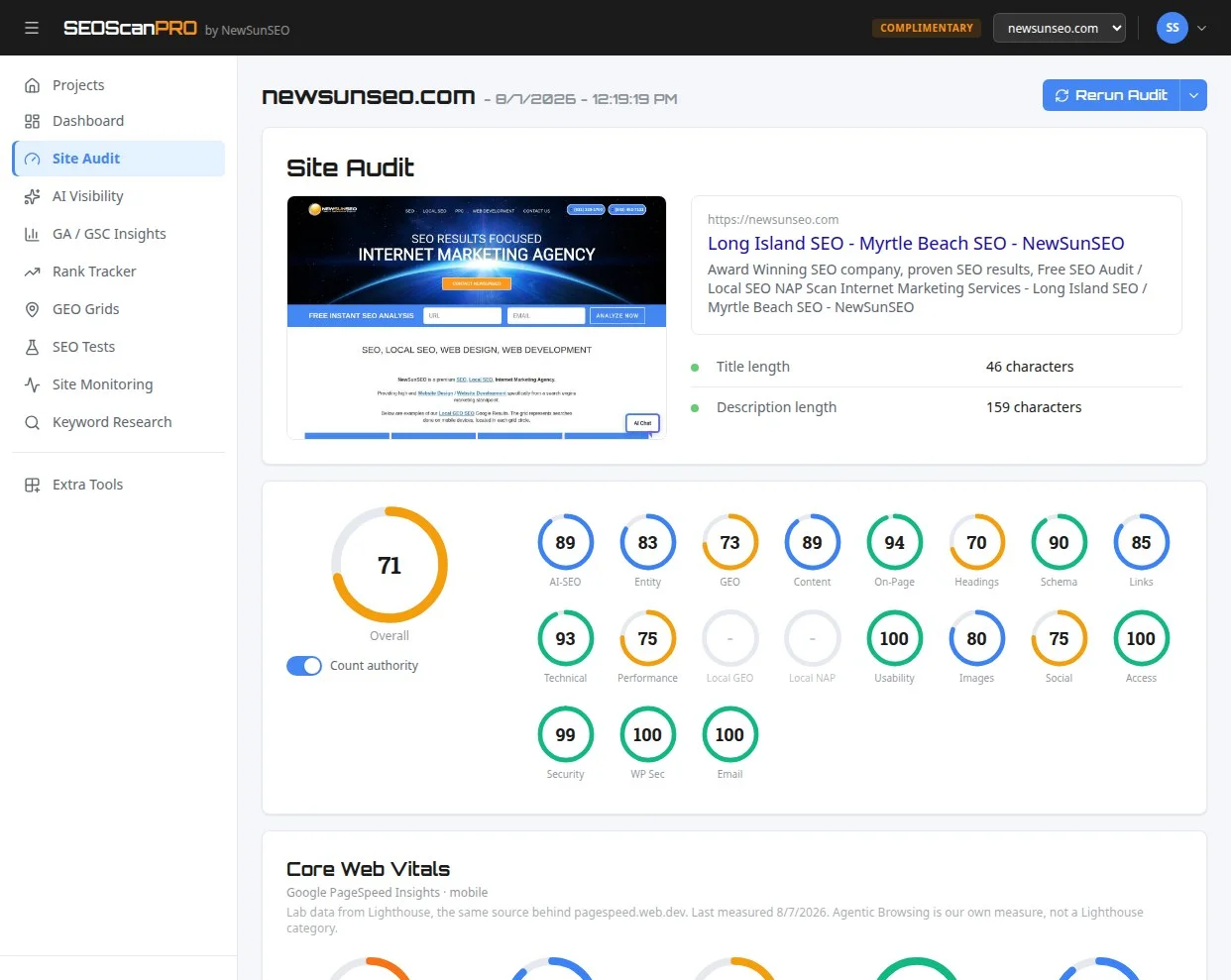
SEOScanPro has the site audit tool runs a full technical audit of a site and shows the measured result behind every check. Open the site audit tool.
This article summarizes reporting from seroundtable.com. See our editorial disclaimer for how our articles are produced.
Run a free scan to see your AI Visibility Score, SEO rating, and local citation accuracy.