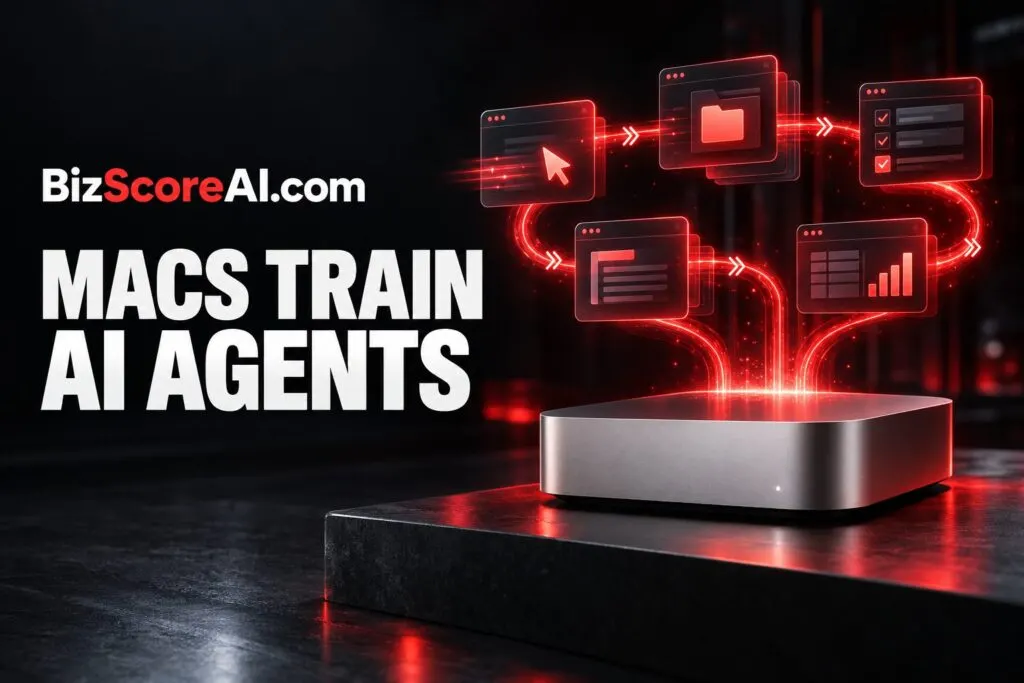
Why AI labs are turning to Apple’s desktops
OpenAI买几万台Mac搞强化训练!英伟达的活被苹果抢了 – 智源社区, drawn to the combination of strong Apple silicon performance, shared unified memory, and the thermal headroom needed for long-running AI workloads.
Anthropic and the broader Mac mini wave
The approach gives the lab elastic capacity without the capital expense of a fleet purchase, and it sidesteps the long lead times on premium configurations.
Outside the major labs, the Mac mini is gaining traction as a local AI computer. A wave of open-source tooling has made it easier to run models at home or in small clusters. The open-source software Exo, for example, links multiple Macs into a cluster so users can run large models locally. Combined with Apple’s strong chips, unified memory, and solid cooling, the platform has become a popular choice for AI hobbyists and independent researchers.
How Apple’s approach compares to Nvidia’s compact option
Nvidia offers a competing compact workstation, the DGX Spark, aimed at the same audience. The two platforms take different routes: Apple’s hardware leans on unified memory that the CPU and GPU share, while the DGX Spark depends on dedicated GPU power through CUDA and Tensor cores, though the unified-memory design remains the main reason developers reach for a Mac when they need a single machine to handle both training and inference on large models.
What this means for AI infrastructure
The shift signals a quiet split in how labs think about small-form-factor AI hardware. Large-scale training still runs on GPU clusters in data centers, but agent training and local experimentation increasingly favor machines with generous unified memory and the ability to run for hours without thermal throttling.
For developers, the practical takeaway is that the Mac mini and Mac Studio have moved from general-purpose workstations to recognized infrastructure for AI work.
FAQ
The hardware offers strong chips, unified memory, and solid cooling suited for long-running AI workloads.
How much did Apple’s Mac revenue grow last quarter?
How does Nvidia’s DGX Spark compare to a Mac mini for AI work?
The DGX Spark relies on dedicated GPU power through CUDA and Tensor cores, while the Mac mini uses Apple’s unified memory architecture shared across the CPU and GPU. Both target compact AI workloads but take different design approaches.
Related coverage
- Manus Cloud Computer: Autonomous AI Agents That Work 24/7 in the Cloud – BizScoreAI
- Gemini API Computer Use: How It Works
See our editorial disclaimer for how our articles are produced.
Run a free scan to see your AI Visibility Score, SEO rating, and local citation accuracy.