
Search engine optimization earns a business organic visibility in search results, one of the most durable competitive advantages in digital marketing. Brands that appear at the top of search results consistently earn more trust than those that do not. This guide explains what SEO is, how it works, and 11 reasons it still matters in a search landscape that now includes AI Overviews, AI Mode, and ChatGPT.
What Is SEO?
Search engine optimization (SEO) is the process of optimizing a business’s website content, structure, and overall online presence to improve its organic (unpaid) visibility in search engine results pages (SERPs). In practice, SEO helps a site earn visibility across Google, including in AI Overviews, AI Mode, and standard organic rankings.
SEO is one of the two main pillars of search engine marketing. The other is pay-per-click marketing (PPC), which is when a business pays to appear as a sponsored search result.
How Does SEO Work?
SEO works by helping search engines understand what a page is about so they can rank it for appropriate queries. Google wants to rank webpages that:
- Satisfy search intent, meaning the result matches what the searcher is trying to achieve
- Demonstrate experience, expertise, authoritativeness, and trustworthiness (E-E-A-T)
- Load quickly and perform well
- Are easy for both search engines and users to navigate
These signals also help AI systems decide which results to surface, so the same work that earns rankings can earn citations in AI-generated answers.
Common SEO tactics include:
- Keyword research: identifying and analyzing the search terms target audiences use
- Content creation: building quality content that meets target audience needs
- Link building: getting other websites to link to a site so it appears more trustworthy
- Technical SEO: improving the technical performance of a site for users and search engines
Why Is SEO Important?
SEO is important because it improves organic visibility in the SERPs, which translates to more brand awareness, more website traffic, and ultimately more sales. Here are 11 concrete reasons it matters.
1. Search engines generate lots of traffic
People run roughly 16.4 billion searches per day on Google alone. Research on how AI shapes traffic channels shows organic search generated over one trillion visits in 2025, more than any other channel. AI traffic is growing faster, up 66% that year, but from a much smaller base of under one billion visits per month against tens of billions from organic search. Capturing organic clicks in a niche means competitors do not.
2. SEO can be highly cost effective
SEO can be more cost-effective than paid channels because a well-ranking page can keep earning visibility for months or years without ongoing ad spend. The main costs are creating the content, updating it over time, and maintaining the site. Once a page achieves high visibility, it can often be maintained with relatively little effort. One case study showed a digital agency helping a brand grow organic traffic from roughly 4,100 to 12,400 monthly visits between 2025 and 2026, with organic keyword visibility up more than 103%, and traffic continuing to climb.
3. Search visibility drives brand awareness and authority
When a brand consistently appears in search results, the audience repeatedly sees its name. Even without a click, repeated exposure builds awareness, and over time the brand is perceived as authoritative and trustworthy. Both factors raise the chance that a searcher engages later.
4. Your competitors are (probably) doing it
If competitors are using SEO, they capture visibility that should be contested. If they are not optimizing for search, there is room to dominate the results in that niche. Comparing keyword rankings against competing domains shows exactly which terms each site owns.
5. SEO complements Google Ads
Ranking both organically and in paid positions fills more of the SERP with the same brand. A meta-analysis found the top five organic results receive significantly more clicks overall than paid ads for the same queries. Combined visibility therefore delivers more than either channel alone.
6. Reach prospects throughout the buying journey
People use search engines at every stage of the buying journey. Informational keywords serve early research, commercial keywords serve product and service comparison, navigational keywords help users reach a specific page, and transactional keywords complete purchases. Matching content to each intent type reaches prospects wherever they are in the funnel. A mattress brand’s size comparison guide, for example, attracts 164,600 organic visits per month across a mix of informational and commercial keywords.
7. Optimization efforts can improve the user experience
Many core SEO tactics are also website best practices, so improving search performance often improves the user experience at the same time. Core Web Vitals affect Google performance directly. Largest Contentful Paint (LCP) measures how long the largest content element takes to load, Cumulative Layout Shift (CLS) measures how much the page layout moves unexpectedly as it loads, and Interaction to Next Paint (INP) measures the longest time it takes the page to confirm a successful interaction. Optimizing these metrics lifts both rankings and on-site experience.
8. Keyword research lets you monitor market trends
Keyword research surfaces rising and falling search demand, which can guide product strategy, content plans, and marketing campaigns. A spike in searches for a specific product category, for example, can justify stocking that item or building content around alternatives.
9. SEO results are quantifiable
Organic rankings, traffic, and conversions can all be measured, which makes it possible to gauge performance, justify investment, and adjust course. A visibility score of 100% means a site holds the top organic ranking for every tracked keyword; 0% means it ranks outside the top 100 for all of them. Tools such as Google Analytics 4 add organic traffic and conversion tracking on top of rank data.
10. SEO helps you protect your brand
SEO makes it possible to control what appears when people search for a brand. If a negative article about a business goes unaddressed, it can rank prominently for branded queries and harm relationships with potential customers. Proactive brand SEO pushes those results down or replaces them.
11. SEO is the foundation for AI search visibility
The same work that earns rankings also earns citations in AI answers. The evaluator has shifted from the human clicking the link to the AI composing the answer, but the fundamentals have not: structured content, authoritative sourcing, and clear signals about what a page is actually about. Optimizing for AI answers is called answer engine optimization (AEO).
AEO shares SEO fundamentals but a few things work differently:
- Direct answers matter more. AI systems tend to pull from content that answers a question plainly and early, so burying the answer under setup can cost a citation.
- Writing is for query fan-out, not a single keyword. AI systems often break a single prompt into multiple sub-queries behind the scenes, so a page optimized around one exact-match keyword can miss the broader set of questions an AI is actually trying to answer.
- Category entry points (CEPs) are a useful anchor. CEPs start from the real-world situations that make someone think of a category in the first place. Pairing CEPs with keyword research gives AI systems and search engines more ways to recognize and cite the content.
Start Building an SEO Strategy
SEO is one of the highest-return investments in digital marketing because rankings compound. Content optimized today keeps earning visibility months and years later, rather than stopping the moment paid spend does. That visibility now spans more than organic results, and the same fundamentals that build it also feed AI search engines, AI Overviews, and answer engines.
FAQ
What is SEO in simple terms?
SEO, or search engine optimization, is the practice of improving a website’s content, structure, and online presence so that it ranks higher in unpaid search engine results. Higher rankings bring more organic traffic and brand visibility.
How does SEO actually work?
SEO works by helping search engines understand what a page is about and whether it satisfies the searcher’s intent. Search engines look for signals such as E-E-A-T, fast load times, easy navigation, and content that matches the query. The same signals also help AI systems decide which pages to cite in generated answers.
Why is SEO still important with AI Overviews and ChatGPT?
SEO is still important because organic search delivered more than one trillion visits in 2025, far more than any other channel. The same fundamentals that earn rankings also earn citations in AI Overviews, AI Mode, and ChatGPT answers, so SEO work compounds across both traditional and AI-driven search.
Related coverage
- Why Your Business Listing Score Depends on Technical SEO (2026 Guide) – BizScoreAI
- Clicks Down, Revenue Up: The Ecommerce SEO Metrics That Matter in 2026 – BizScoreAI
SEOScanPro
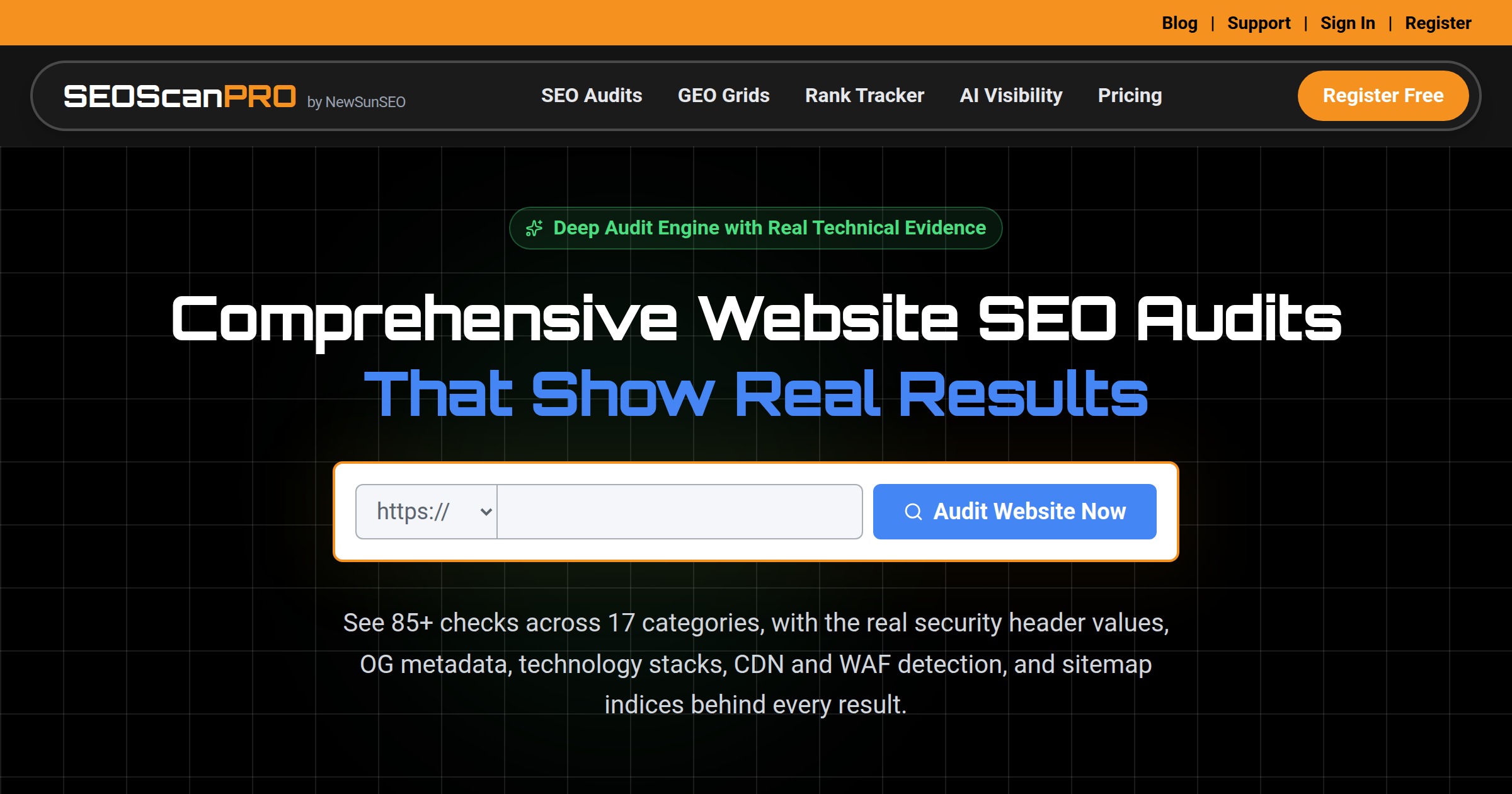
SEOScanPro has the AI visibility report runs a full technical audit of a site and shows the measured result behind every check. Open the AI visibility report.
This article summarizes reporting from semrush.com. See our editorial disclaimer for how our articles are produced.
Run a free scan to see your AI Visibility Score, SEO rating, and local citation accuracy.