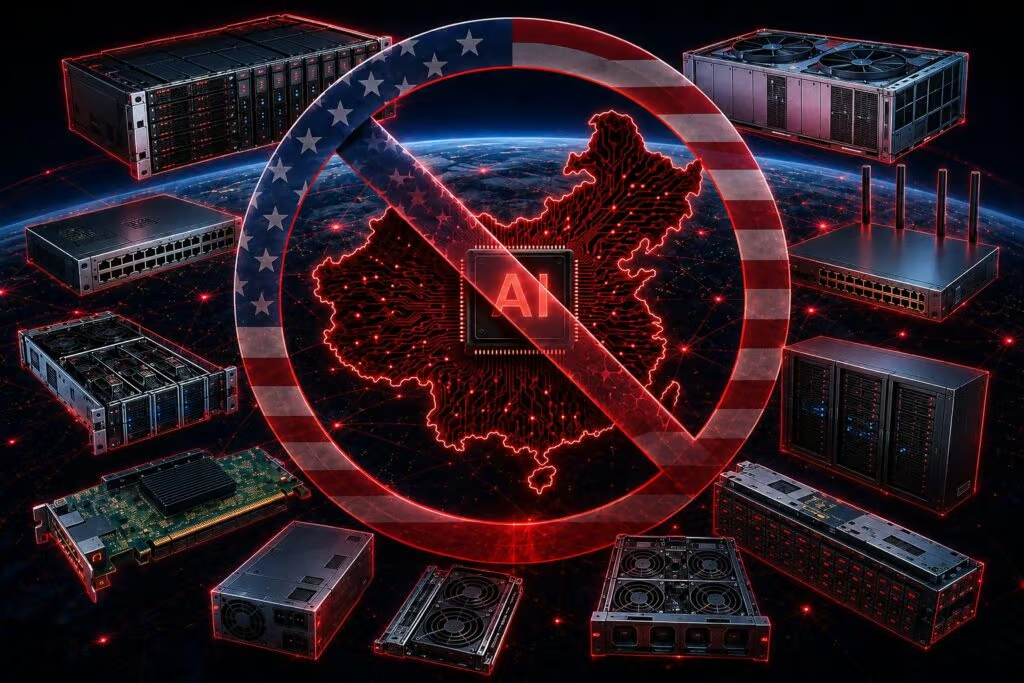
US officials are drafting a ban on Chinese-made devices used in American data centres, according to Reuters, the latest move to wall the infrastructure behind the US AI buildout off from Chinese technology. The draft follows a separate ban, unveiled days earlier, on new Chinese humanoid robots and power inverters that were added to a restricted list over fears they could become supply-chain vulnerabilities or remote-access points. Data centres are the natural next target because they hold the servers, networking gear, and power equipment at the physical core of the AI economy.
Why data centres are the next target
Regulators have been widening a campaign to keep Chinese-controlled components out of critical infrastructure. The earlier move against humanoid robots and inverters set the template, and officials are now extending it to the gear that trains and serves AI. The logic, as described in the draft and surrounding reporting, is that if AI is a strategic asset, the machines behind it should not depend on parts made by a rival that could, in theory, disrupt or surveil them.
Networking switches, servers, storage systems, and the management chips inside them are the most likely categories in scope. Any of these could, in theory, carry a hidden path back to a foreign vendor, and untangling the supply chain will not be instant.
Where the pressure is hardest to enforce
Bans of this kind are routinely undercut by resellers, relabelled parts, and subsidiaries. Closing those loopholes is as much of the drafting work as naming the banned devices. American operators still lean on Chinese components in places, and some networking and power equipment has few non-Chinese equivalents at the price and volume that the current buildout demands.
Rules drafted in a hurry can sweep in gear with no viable substitute, leaving operators to choose between breaking the rules and stalling their builds.
How allies and Beijing are responding
Washington has been nudging allies to mirror its curbs. Britain and others have weighed following, which would widen the market that Chinese vendors lose at a stroke. Beijing has not taken the pressure quietly. China has threatened retaliation over the US robot ban, including leverage over the rare-earth minerals that Western manufacturers cannot easily source elsewhere. The two sides are now trading restrictions in a familiar rhythm: each ban invites a counter-ban, and a technology supply chain that took decades to knit together is being unpicked category by category.
What it means for the AI buildout
The administration casts hardware decoupling as protecting the American AI buildout, the same rationale used to justify export controls on chips flowing the other way. Ripping Chinese devices out of data centres, or barring cheaper Chinese gear, raises costs for the operators racing to build capacity, a tension the industry has flagged even as it accepts the security case. US startups have also urged the administration not to restrict Chinese AI models themselves, warning that cutting off cheap open-weight models would hurt American developers more than China.
China is building its own way around the same problem. A Chinese lab recently stood up a large data centre with no Nvidia inside, a sign of how completely both countries now want domestic control of the AI stack.
What happens next
The draft is not final, and the exact list of banned devices is still being written. The direction, however, is unmistakable: on both sides of the Pacific, the machinery of artificial intelligence is becoming something each superpower insists on building for itself.
FAQ
What is the US proposing to ban from data centres?
Officials are drafting a ban on Chinese-made devices used in data centres, including categories such as networking switches, servers, storage, and the management chips inside them.
Why is the US targeting Chinese data centre hardware?
Regulators argue that Chinese-controlled components in critical infrastructure could become supply-chain vulnerabilities or remote-access points, and that the machines training and serving AI should not depend on parts made by a rival power.
How could allies and China respond to the ban?
Britain and other allies have weighed mirroring the US curbs, while China has threatened retaliation over the earlier robot ban, including leverage over rare-earth minerals that Western manufacturers cannot easily source elsewhere.
This article summarizes reporting from thenextweb.com. See our editorial disclaimer for how our articles are produced.
Run a free scan to see your AI Visibility Score, SEO rating, and local citation accuracy.