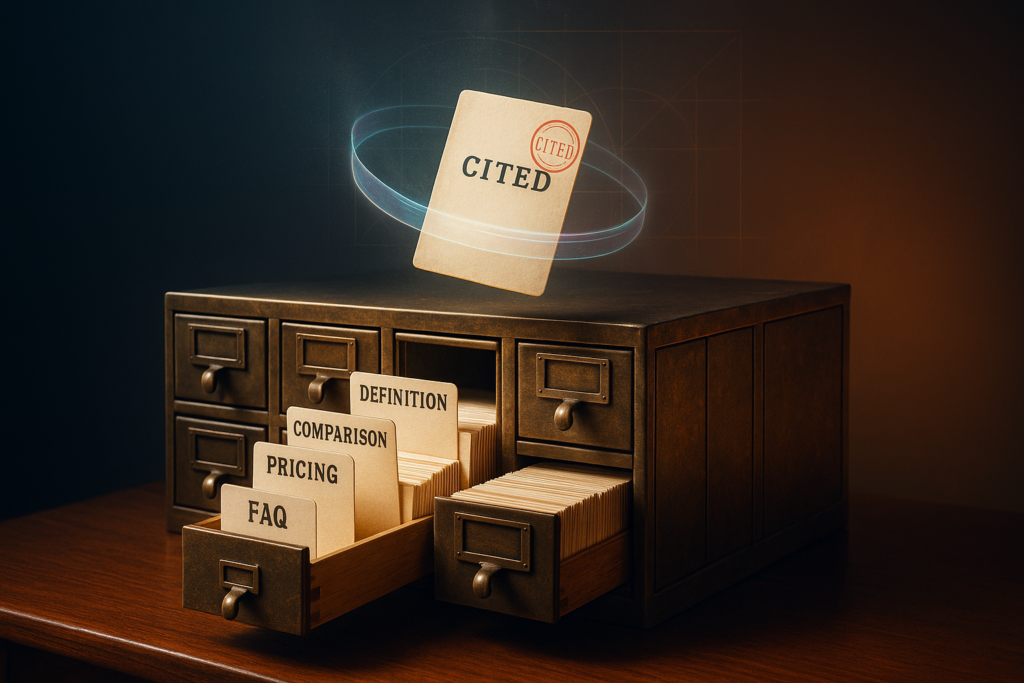
People searching for your type of business on Google often see an AI-generated answer before any listings or websites. That answer is pulled from web content that Google’s AI can read, extract, and summarize. Whether your business gets cited or skipped comes down to how your content is written and structured, not about how much you write. It’s not about writing more; it’s about writing smarter.
What Are AI Overviews and Why Do They Matter for Your Business?
Google’s AI Overviews appear at the very top of search results for many queries. They provide a direct answer, often pulling text from multiple websites, and users frequently stop there without clicking through to any result.
Your business can be bypassed if your content isn’t structured for AI extraction. The opportunity: if your content is structured correctly, AI systems may surface it at the top of the results page even when users don’t click through.
Short Content vs. Long Content: Which Gets Cited?
Content that answers the query gets cited. The right length depends on what the question actually asks.
Short Content Wins for These Query Types
- Definition queries: “What is [your service]?” calls for a clean, one or two-sentence answer at the top of the page.
- Local searches: “Best [business type] near me” or “[service] in [city]” rewards concise service descriptions with clear location signals.
- Pricing queries: “How much does [service] cost?” performs best with direct price ranges or structured pricing breakdowns, not long explanations.
- FAQ-style searches: Any question a customer might ask (“Do you offer X?” “Are you open on weekends?”) benefits from a direct one or two-sentence answer.
Long Content Wins for These Query Types
- Comparison queries: “X vs Y” searches need structured breakdowns with clear sections. A longer page with comparison tables gives AI multiple citation opportunities.
- How-it-works explanations: If your service requires explanation (a multi-step process, a technical concept), depth and detail build authority and increase citation likelihood.
- High-consideration decisions: B2B buyers and customers making significant purchases want detail: case studies, ROI data, process breakdowns. Long-form earns trust and citations here.
How to Structure Your Business Content for AI Extraction
Structure affects whether AI can extract and cite your content.
- Lead with the answer. Don’t bury your key information three paragraphs in. State your main point, service, or answer in the first sentence after each heading.
- Keep paragraphs short. Aim for 40-60 words per paragraph. Dense blocks of text are harder for AI to isolate as clean, quotable passages.
- Use specific headings. Format your headings as questions or clear topic labels. “What services does [Business] offer?” works better than “Our Services.”
- Add structured data where possible. Lists, tables, and FAQ sections are parsed easily by AI systems and frequently pulled into Overviews.
- Keep your information current. AI Overviews favor content with up-to-date details. Outdated pricing, hours, or service descriptions reduce citation likelihood.
Do Your Business Listings Matter for AI Overviews?
Yes. Your business listings across the web, including your Google Business Profile, directory listings, and review platforms, all contribute to how AI systems understand and represent your business.
Inconsistent NAP (Name, Address, Phone) data, incomplete descriptions, and stale category information can undermine your AI visibility even if your website is perfectly structured. Keeping your listings accurate, complete, and consistent is now a foundational part of AI search optimization.
According to BizScoreAI, the platform tracks and scores your business presence across these signals so you can see where your listings may be helping or hurting your AI visibility, and help fix the gaps that matter most.
The Takeaway
The businesses getting cited in AI Overviews aren’t winning because they write the most content. They’re winning because their content is structured for extraction: clear answers, logical formatting, matched to the intent of real customer queries.
Audit your website and listings with this lens: Can Google’s AI pull a clean, direct answer from each page? If not, that’s where your AI visibility is leaking.
See how BizScoreAI scores your business presence, which can help highlight gaps that may affect AI Overview citations.
FAQ
Does longer content always rank better in AI Overviews?
No. AI Overviews cite content that directly and clearly answers the query, regardless of length. Short content wins for definition, local, pricing, and FAQ-style queries, while long content wins for comparison, how-it-works, and high-consideration decision queries.
What page structure helps AI Overviews cite your content?
Structure that leads with the answer in the first sentence after each heading, keeps paragraphs to 40-60 words, uses question-form or specific headings, includes lists, tables, and FAQ sections, and keeps pricing, hours, and service details current.
Why do business listings matter for AI Overview visibility?
AI systems pull from your Google Business Profile, directory listings, and review platforms to understand and represent your business. Inconsistent NAP data, incomplete descriptions, and stale category information can reduce your AI citations even when your website is well structured.
Run a free scan to see your AI Visibility Score, SEO rating, and local citation accuracy.