
Site owners now have a clearer way to measure how ads affect the real-world experience of their pages. Google has updated its page experience help document for Google Search results to include the new CrUX ad metrics that launched the prior week. The addition gives publishers concrete, Chrome-reported data on ad count, ad density, and ad weight.
What the Documentation Change Covers
The new line appears in the document’s Page experience resources section. It describes CrUX ad metrics as experimental Chrome metrics that help site owners understand their site’s ad count, ad density, and ad weight. The metrics provide insight into real users’ ad experiences on a site as seen and reported by Chrome.
Google has not said these ad metrics are a specific ranking signal for search. The update simply adds them to a list of resources that can inform how a site evaluates its own experience. The intent is to give site owners another measurement tool for understanding the state of their pages.
Each Metric Explained
The CrUX ad metrics break down into four distinct measurements:
- Ad Count: The average number of ads in the viewport.
- Ad Density: The average fraction of the viewport area occupied by ads.
- Ad Weight (Network Usage): The resources consumed by ads, measured in bytes.
- Ad Weight (CPU Usage): The resources consumed by ads, measured in milliseconds.
Together these metrics give a publisher visibility into whether ads are crowding the visible area of a page or consuming significant device resources for real visitors.
Metrics Are Not the Same as Ranking Factors
Google clarified the distinction between available metrics and direct search ranking factors. The ad metrics were included simply because they are available and they make it easier to discuss and improve a website’s experience, whether that work is labeled SEO or not. Plenty of ways exist to improve a website’s experience, and having measurable numbers helps teams align on what to address.
This distinction matters because of the long-running confusion over how much page experience and Core Web Vitals influence Google Search rankings. Google’s guidance has shifted over time. The company has said it would not confirm page experience or Core Web Vitals as direct ranking factors, and later confirmed Core Web Vitals as a ranking factor. Google has also explained that page experience is a ranking signal but not a ranking system, meaning the signals are used by other systems rather than operating as a standalone system themselves.
Amid that history, Google removed the page experience report from Search Console, which added to publisher uncertainty. The addition of CrUX ad metrics to the documentation is separate: it does not change what is or is not a ranking factor, and it does not restore the removed report. It simply surfaces experimental data that publishers can opt to review.
Why Ad Experience Data Matters for Site Owners
Ad-heavy pages can slow loading, consume data, and push content out of view. The CrUX ad metrics give a clear, real-user basis for evaluating how severe those problems are on a given site. A publisher can see the average count of ads visible to users, how much of the screen those ads take up, and how much network and CPU capacity they demand.
Those numbers are useful even without any ranking claim attached. A site that measures high ad weight or density can make an informed decision about reducing ad load, changing placements, or swapping ad providers. The metrics turn a subjective feeling that a page has too many ads into a shared set of numbers a team can work against.
Page Experience Context
The page experience help document sits within Google’s broader guidance for how search results evaluate pages. The CrUX ad metrics line joins other resources there, but Google has been careful not to position any of these metrics as guarantees of ranking changes. The consistent message is that these numbers describe the state of a site, and teams can choose how to act on that description.
For site owners who want a quick view of whether ad load is undermining the rest of their experience work, the four metrics offer a specific, Chrome-sourced reference point. Real-user data collected by Chrome reflects what actual visitors encountered, which is often different from what a lab test or a single device shows.
FAQ
What are CrUX ad metrics?
CrUX ad metrics are experimental metrics from Chrome that report ad count, ad density, ad weight in network usage, and ad weight in CPU usage. They describe real users’ ad experiences on a site as seen by Chrome.
Are CrUX ad metrics a Google ranking factor?
No. Google has not said the CrUX ad metrics are a specific search ranking signal. They were added to the page experience documentation as available metrics to help evaluate the state of a site.
What does each CrUX ad metric measure?
Ad Count measures the average number of ads in the viewport. Ad Density measures the average fraction of the viewport area occupied by ads. Ad Weight (Network Usage) measures ad resource use in bytes, and Ad Weight (CPU Usage) measures it in milliseconds.
Related coverage
SEOScanPro
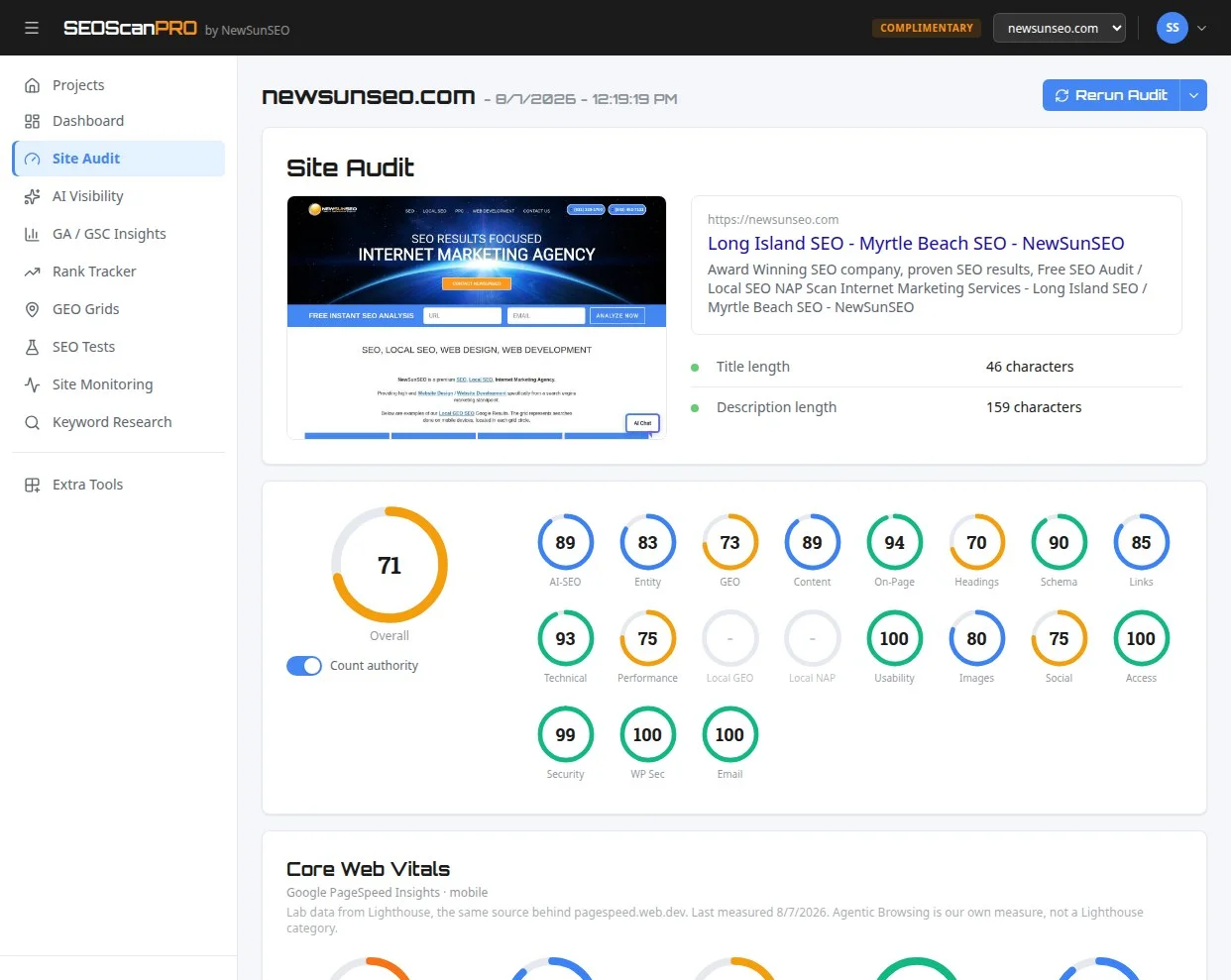
SEOScanPro has the site audit tool runs a full technical audit of a site and shows the measured result behind every check. Open the site audit tool.
This article summarizes reporting from seroundtable.com. See our editorial disclaimer for how our articles are produced.
Run a free scan to see your AI Visibility Score, SEO rating, and local citation accuracy.