
Google’s John Mueller says search systems will eventually recognize shortcut tactics such as mass-produced AI content, listicles and other easily repeated techniques. His advice for businesses is to build content that search engines and AI systems will want to surface over the long term rather than depend on tactics that may work only temporarily.
Mueller made the comments in an interview with David Iwanow. He said listicles are not inherently spam, but relying on thousands of them as an entire content strategy is risky. He compared AI-scaled content with older tactics such as keyword stuffing and white text on a white background, warning that these methods may work at first but can eventually fail.
How Search Systems Can Learn to Discount Shortcut Tactics
Mueller said people repeatedly discover a trick, publish advice about it and then use it at scale. Search systems can eventually recognize the pattern when it becomes widespread and damaging to actual businesses. The value of a tactic that works today, he said, can disappear once systems learn to discount it.
A site that depends on cheap, fast production tactics may need a different publishing approach if those patterns are recognized. Mueller recommends building content that search engines and AI systems will want to show to people in the long run.
There is also independent evidence that AI is being used to scale unwanted content. Columbia Engineering reported that a study accepted to ACM Internet Measurement Conference 2025 found that 51 percent of spam emails in April 2025 were generated using artificial intelligence. The research also found that 14 percent of business email compromise attacks showed signs of AI use.
The research was the first academic work to quantify AI’s role in modern spam and phishing attacks. Its lead author, Wei Hao, said attackers primarily use AI to improve email quality by reducing typos and grammatical errors rather than changing attack strategies. The research was conducted with the University of Chicago and Barracuda Networks.
Scalable Cluster Termination System (2026)
Google published a research paper titled Scalable Cluster Termination System in 2026. The paper concerned AI-generated spam networks rather than every page produced with AI. Designed to terminate networks of mass-generated AI spam, the system addressed clusters created by scaled production tactics.
What Should Businesses Publish?
Mueller did not say every AI-assisted or listicle-based page is spam. His concern was relying on an easily repeated tactic as the whole content strategy. Review each page for material that search and AI systems can recognize as useful.
Mueller also advised questioning consultants who promise extraordinary results. Ask each SEO or content consultant to explain the methods used and the results they expect from those methods. A short-term ranking tactic may be discounted after its pattern becomes widespread.
What Else Did Mueller Say About SEO?
Technical SEO Will Remain Relevant
Mueller expects AI systems to continue building on SEO, particularly technical SEO. He said AI systems may crawl websites for purposes including model training and retrieving fresh information, but regarded those differences as another part of technical SEO rather than its replacement.
Crawl Stats Is an Underused Report
Mueller identified the Crawl Stats report in Google Search Console as a report that more site owners should check periodically. He advised watching for unusual crawl activity or a sudden increase in the time Google takes to crawl pages. A reduction in crawling can take time to recover from.
Long Redirect Chains Are Not Automatically a Problem
Mueller said he had not encountered sites with problems simply because they had long redirect chains. Google can often learn the current destination and crawl those URLs directly. He advised investigating redirects when diagnosing an actual issue, such as a canonicalization problem, rather than assuming a particular number of hops triggers a penalty.
The URL Parameters Tool Will Not Return
Asked whether the URL Parameters tool might return to Search Console, Mueller said he was pretty sure it was gone. The tool was complicated to use, while Google had worked on understanding URL parameters automatically. He hoped Google could automate more tasks that previously required manual configuration.
Ecommerce Product Data Needs to Be Understandable
For ecommerce product variants, Mueller recommended using official product attributes and values when available because they help Google’s systems understand products. Product names also need to be understandable to consumers. A shopper looking for a red shirt may not recognize a retailer’s internal label such as "crimson."
Support Forums Can Help Diagnose Problems
Mueller recommended Google Search Central’s support forums because product experts can recognize patterns and escalate issues to Google employees. He also praised private SEO communities on Slack, where people can share specific URLs and troubleshoot problems without the hostility he associated with public social media.
What to Do Now
- Review the pages created through mass-produced AI content, listicles, keyword stuffing or other repeated tactics.
- Ask each SEO or content consultant to explain the methods used and the results they expect from those methods.
- Check the Crawl Stats report in Google Search Console periodically.
- Use official product attributes and consumer-readable product names for ecommerce variants.
- Investigate redirect chains when diagnosing a confirmed technical issue.
FAQ
Will Google Search Systems Catch AI-generated Content?
John Mueller said search systems will eventually recognize shortcut tactics when they become widespread and damaging to actual businesses. He compared AI-scaled content with keyword stuffing and white text on a white background, tactics that may work temporarily but can eventually fail.
Are Listicles Considered Spam by Google?
Mueller said listicles are not inherently spam. Relying on thousands of them as an entire content strategy is risky because tactics can become recognizable and discounted.
Will Technical SEO Remain Relevant as AI Systems Crawl Websites?
Mueller expects AI systems to keep building on SEO, especially technical SEO. He said crawling for model training and fresh information represents another aspect of technical SEO rather than its replacement.
Related Coverage
- Google Research on AI Spam Detection Explained
- Google Search Volatility After August 2026 Spam Update
SEOScanPro
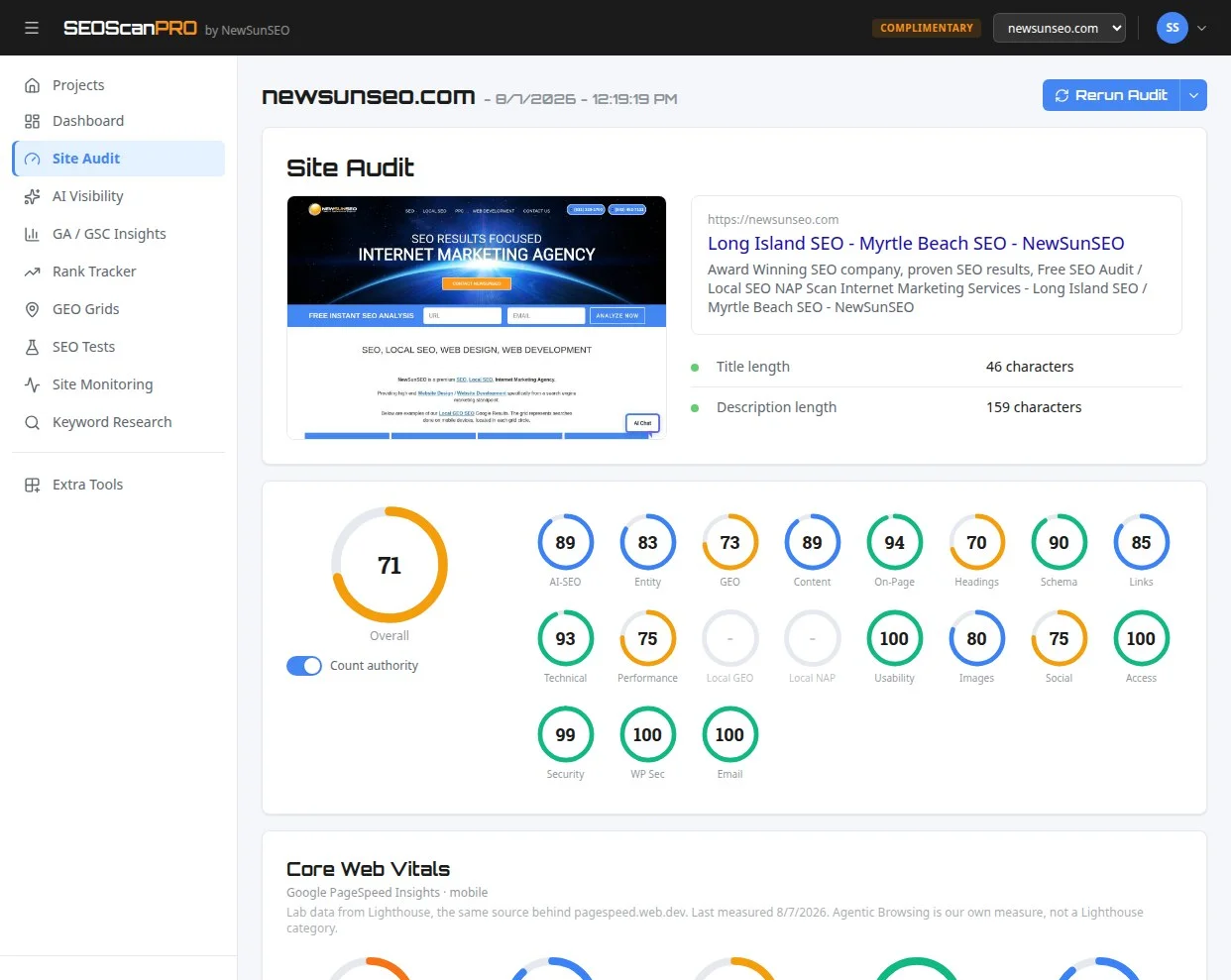
SEOScanPro runs a full technical audit of a site and shows the measured result behind every check. Open the site audit tool.
Sources
See our editorial disclaimer for how our articles are produced.
Run a free scan to see your AI Visibility Score, SEO rating, and local citation accuracy.