Google’s AI Overviews already decide whether to cite your business, or a competitor’s, when customers search for what you offer. Whether your content is structured to earn those citations is the real question.
It is not about writing more. It is about making your content easy for AI to read and extract.
How Do AI Overviews Actually Work?
When a customer searches a question like “best plumber near me” or “how much does SEO cost,” Google supplements the ranked list of pages with an AI-written answer at the top and snippets from authoritative, well-structured websites.
That AI answer often satisfies the user’s question completely. Many users never scroll down to the organic results. If your business is cited in that AI overview, you get visibility even without the click. If you are not, you may be invisible for that query, regardless of your traditional rankings.
Is There a Word Count Myth?
For years, the standard SEO advice was to publish long articles. More words meant more keywords, more perceived authority, and better rankings. That logic is now outdated.
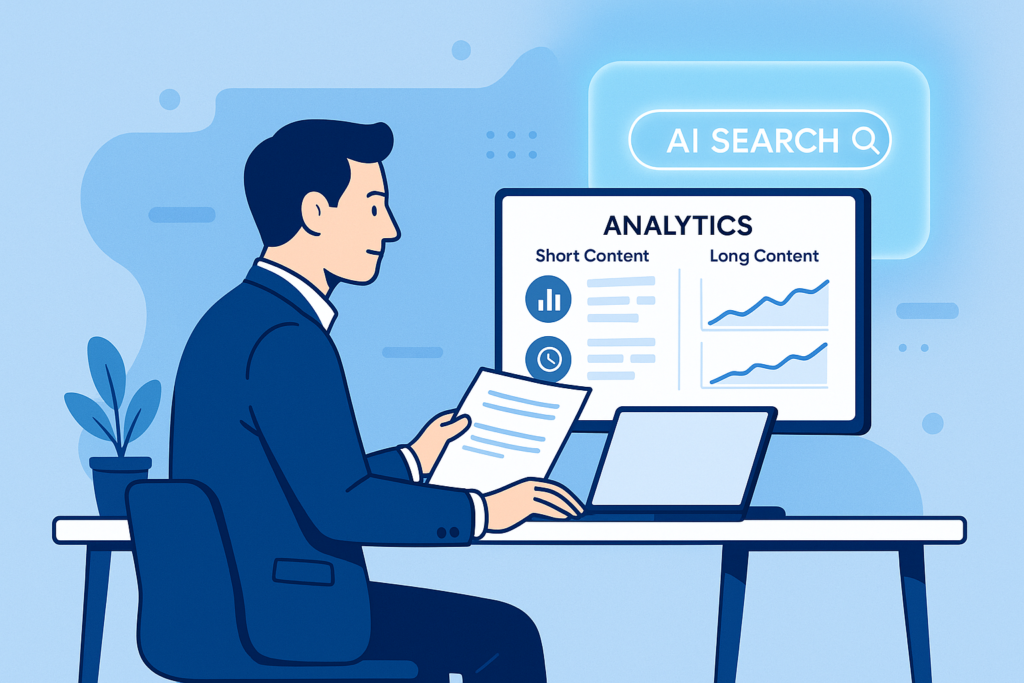
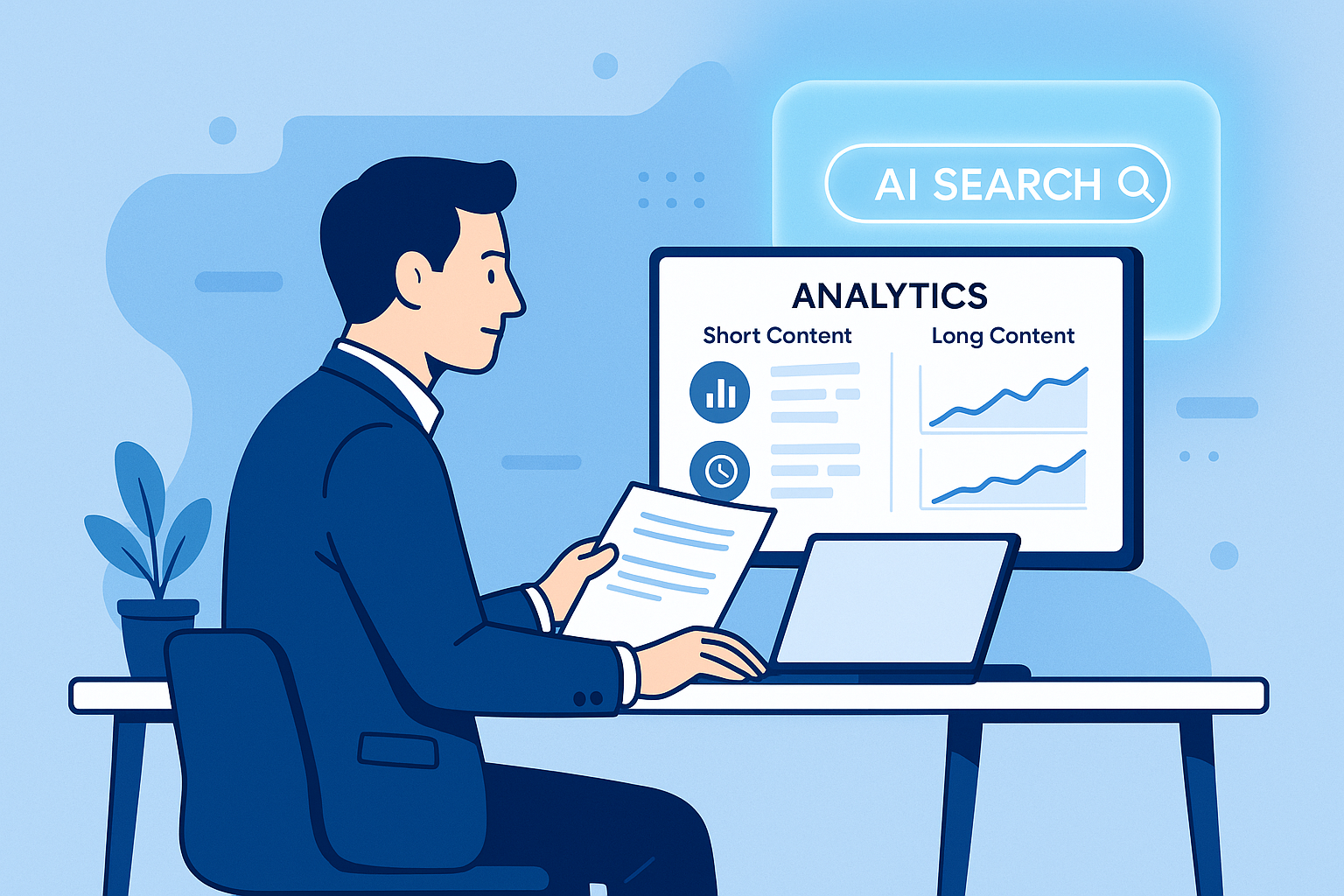
AI Overviews do not prefer long content or short content. They prefer content that is easy to read and extract. A well-structured 300-word answer to a specific question can outperform a rambling 2,000-word article for AI citation purposes.
The real question is: can AI pull a clean, complete answer from your page?
Where Does Short Content Win for Local Businesses?
For many of the queries your customers use, short and direct content performs best:
- "What is [your service]?" Definition queries need a clean one or two-sentence answer up front. If your answer is buried in paragraphs, AI pulls a cleaner definition from a competitor.
- "How much does [service] cost?" Pricing pages with clear numbers and short descriptions are highly citable. Vague pricing copy is not.
- Local intent searches: "Best [business type] near me" queries favor content with specific location signals, service lists, and concise descriptions, not long-form prose.
- FAQ pages: Direct Q&A format is one of the most AI-friendly content structures available. If you do not have an FAQ page, you are leaving citations on the table.
Where Does Depth Still Matter?
Some queries require more comprehensive content to earn AI citations, and these are often the higher-value searches:
- Educational content: "How does [process] work?" queries reward businesses that explain their industry clearly. This builds trust and authority with both AI and customers.
- Comparison queries: "[Your service] vs [alternative]" content requires enough depth to meaningfully compare options. Structured comparison tables work especially well.
- Industry-specific expertise: Demonstrating real-world knowledge through case studies, specific data, and first-hand examples builds the E-E-A-T signals AI systems favor when selecting sources.
What Content Changes Improve AI Citability?
You do not need to rebuild your entire website. These five targeted changes move the needle:
- Put the answer first. Every page and every section should open with a direct response to the implied question, within the first two sentences. Do not make users (or AI) hunt for it.
- Break up text into short blocks. Paragraphs of 40 to 60 words are easier for AI to isolate and extract than dense walls of text.
- Use structured formatting. Headers, bullet lists, numbered steps, and simple tables all signal structure that AI systems can parse easily.
- Add or expand your FAQ section. A well-organized FAQ page covering your most common customer questions is one of the highest-ROI content investments for AI visibility.
- Keep your content current. Outdated pages are less likely to be cited. Refreshing key pages with new data, examples, or updated information improves your citation odds.
How Does Your Business Listing Affect This?
AI Overviews do not only pull from websites. They also incorporate data from business directories, review platforms, and structured business profiles. That means your presence on BizScoreAI, Google Business Profile, and other listing platforms directly influences whether AI systems consider your business credible and citable.
Accurate, complete, and consistent business information across platforms is both good practice and an AI visibility signal. Businesses with strong, complete profiles are more likely to appear in AI-generated local answers.
The Takeaway
The businesses that win AI Overview citations in the next few years will not be the ones with the longest content, they will be the ones with the most extractable content. Clear answers, logical structure, real expertise, and up-to-date information.
Start with your highest-traffic pages and your FAQ section. Apply the answer-first principle to every major section. And make sure your business listings are complete and consistent everywhere customers might find you.
That is the content strategy that earns citations, not a specific word count.
FAQ
Do AI Overviews prefer long or short content?
Neither. AI Overviews prefer content that is easy to read and extract, regardless of word count. A well-structured 300-word answer can outperform a rambling 2,000-word article for AI citation purposes.
What kind of content earns the most AI Overview citations?
Content that is extractable: clear answers up front, short paragraphs (40 to 60 words), structured formatting like headers and lists, an organized FAQ section, and up-to-date information. Direct Q&A format is one of the most AI-friendly structures available.
Do business listings affect AI Overview visibility?
Yes. AI Overviews pull from business directories, review platforms, and structured business profiles in addition to websites. Accurate, complete, and consistent information across platforms like BizScoreAI and Google Business Profile is an AI visibility signal that influences whether your business is considered credible and citable.
Related coverage
Run a free scan to see your AI Visibility Score, SEO rating, and local citation accuracy.