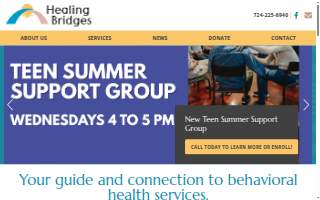
Healing Bridges
BizScore
Contact Information
-
Address
378 W Chestnut St #205, Washington, PA, 15301 -
Phone
(724) 225-6940 -
Website
myhealingbridges.org
Location
About Healing Bridges
Healing Bridges is a mental health counselor in Washington, PA, serving individuals of all ages through recovery-oriented behavioral health services. The organization provides counseling and therapy, including individual, family, and group sessions, telehealth options, mobile mental health care, medication management, and mobile case management. It supports clients with intellectual and developmental disabilities and offers specialized groups focused on grief, loss, and anger management. Healing Bridges serves residents of Washington County and neighboring communities, connecting them to comprehensive care through a nonprofit model rooted in compassion and accessibility.
Healing Bridges was formally established as Washington Communities Human Services and has been serving Washington County since 1968. The agency emphasizes a humanistic approach, guiding clients toward stability and self-worth through tailored support and resources. Its leadership team, including CEO Natalie Ross, brings decades of experience in behavioral health, criminal justice, and human services. The organization operates with core values of compassion, collaboration, equality, dignity, and diversity, aiming to reduce stigma and foster healthier communities through accessible, responsive services.
The business is located at 378 W Chestnut St #205 in Washington, PA, situated on West Chestnut Street, a main road. It is about a tenth of a mile from the Washington Post Office and approximately 0.2 miles from Washington High School. The location lies near Catfish Creek, which runs just under 70 meters away, and is within a short distance of Jefferson Avenue, another major thoroughfare. These landmarks define the immediate area around the office.
Healing Bridges has a long-standing presence in the community, with a mission centered on empowering individuals through mental health and developmental support. Its services reflect a deep commitment to accessibility, recovery, and the well-being of residents across Washington County. The organization continues to expand opportunities for emotional and behavioral health care, particularly through initiatives like the Responders First Initiative, which supports first responders with critical incident stress management.