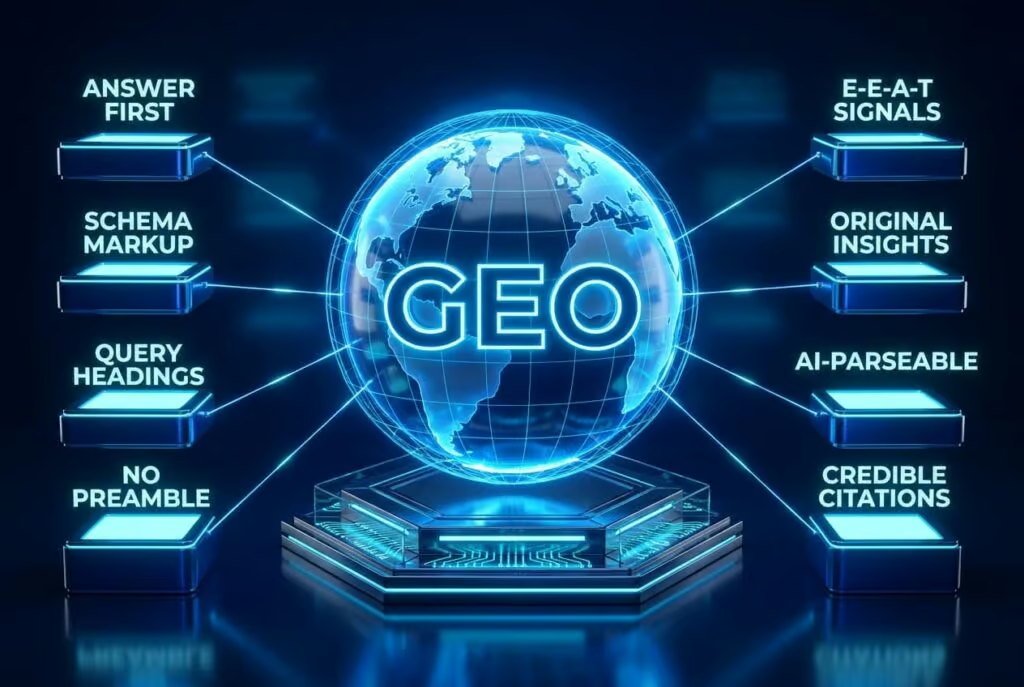
AI search engines such as Google AI Overviews, ChatGPT, and Perplexity cite pages rather than rank them, which makes content strategy a binary choice for every URL: update the page so AI trusts and cites it, or create something new. In 2026, pages that aren’t cited are effectively invisible. Answer Engine Optimization (AEO) and Generative Engine Optimization (GEO) provide a framework for that choice, rewarding a refresh-first mindset backed by a clear decision tree.
AI-driven search ranks pages and cites them. Update your high-equity content first, then build new authority where gaps exist.”
Why It Matters
AI-powered search is no longer a novelty. Google surfaces AI Overviews for everything from product comparisons to local service queries. ChatGPT Search and Perplexity have trained users to expect synthesized, citation-backed answers rather than a list of links. For businesses and content-driven brands, that means the old SEO playbook, target keywords, publish, and wait, falls short. Visibility now depends on whether a page’s content is structured so that an AI model can extract, trust, and reference it. That’s not a one-time project; it’s an ongoing discipline of knowing when to refresh what’s already working and when to build entirely new assets.
What’s the AEO and GEO Framework?
Two optimization disciplines define modern content strategy: Answer Engine Optimization and Generative Engine Optimization. They share a common goal, making your content the most citable source for AI, but operate at different layers.
Answer Engine Optimization (AEO) focuses on delivering a direct, extractable answer. AI overviews, featured snippets, and voice assistants pull from pages that place a concise response within the first 100 words, use FAQ or HowTo schema, and give every section a heading that mirrors how people actually ask questions. If the answer is buried in a 500-word preamble, AI engines skip it.
Generative Engine Optimization (GEO) targets the next step: being one of the sources a model synthesizes into a full response. GEO demands demonstrable expertise, original data, and credible citations. It’s not enough to answer the question; the page needs to signal authority so the model chooses it over a dozen alternatives when building its reply.
Modern AI search tools use Retrieval-Augmented Generation (RAG) to fetch live data from search indexes before generating an answer. When you update an existing URL with richer, semantically dense content, the engine reprocesses only what changed, inheriting the trust signals and entity associations the page already holds. A brand-new URL, by contrast, must be crawled, indexed, and assigned a trust score from zero, a process that can take weeks or months. That’s why a refresh-first strategy typically yields faster citation gains than an equal effort poured into net-new pages. The exception is when the existing content genuinely can’t serve the need anymore.
Which Pages Should You Update First?
Not every page deserves the same treatment. Apply these prioritization signals to decide where to focus:
- Top priority: pages ranking in positions 11-30 with strong backlinks. They already have baseline entity recognition and domain authority; they’re closest to AI citation territory and need the lightest structural lift.
- High priority: high-impression pages with declining click-through rate. When a page gets search impressions but users aren’t clicking, the title or the on-page answer no longer matches intent. A refresh that front-loads the core answer and updates supporting details often recovers lost ground quickly.
- High priority: pages with more than 100 referring domains but zero AI citations. The authority is there; what’s missing is the structural formatting, schema markup, and direct-answer signals that AI engines need to cite a source.
- Lower priority: thin, low-authority pages with no traffic. These may be better candidates for consolidation into a stronger pillar page or for a complete rewrite from a new angle.
“For some queries, content that is more recent may be more relevant and useful. If a page’s content becomes outdated, updating it may improve its quality.”
, Google Search Central
The data from Google’s own SEO Starter Guide reinforces the core insight: freshness is a relevance signal, and regular updates don’t merely refresh a date stamp, they tell AI systems the page is actively maintained, which accelerates inclusion in knowledge panels and generated responses.
What Comes Next
AI search is still evolving fast. Models are getting better at detecting stale content, comparing claims across sources, and weighting authoritative signals like first-party data and named expert contributions. In the near term, content freshness and structural clarity will become table stakes for AI visibility. Sites that adopt a disciplined audit schedule, refreshing high-priority pages every 30 to 90 days, addressing intent shifts immediately when an industry event occurs, and consolidating overlapping posts, will build a durable citation footprint. Those that treat every new trend as a reason to publish an entirely new page risk fragmenting their authority and confusing the AI systems they’re trying to win over.
How to Apply This to Your Site
If you’re running a business, whether you manage a content library, a set of service pages, or local listings, this framework is directly actionable. Start with a content audit. Identify every page that ranks on the second page of results or has earned strong backlinks but no AI presence. Update those first: add a direct answer in the first paragraph, implement FAQ or Article schema, refresh statistics and examples to current-year data, and restructure headings as real questions. If you have multiple posts targeting nearly identical queries, merge them into one comprehensive pillar page and redirect the old URLs to preserve link equity. Only build new content when you’re tackling an entirely new topic, the existing page is fundamentally flawed, or you need to target a distinct keyword cluster that can’t live inside an existing piece.
This approach directly affects your AI contactability, the chance that a customer asking an AI agent will be given your name instead of a competitor’s. For location-based businesses, every local SEO page, from neighborhood service pages to Google Business Profile-linked content, benefits from the same AEO/GEO refresh cadence. If you’re not sure where you stand, a quick scan of your most-cited pages often reveals where structural gaps are costing you citations.
For a deeper look at how AI models combine multiple sources to generate answers, read AI Model Fusion Beats Solo AI Search. And if you need a practical checklist for making your business visible in AI search, our Top 10 Things That Help AI Find Your Business guide covers every essential step.
The Bigger Picture
Publishing more pages no longer solves the problem. AI-driven search rewards intentionality: a well-maintained library of authoritative, frequently updated pages will outperform a sprawling collection of thin, abandoned URLs every time. The decision to update, consolidate, or create isn’t a one-time choice; it’s a repeatable discipline that keeps your content credible in the eyes of the engines that now decide who gets found.
FAQ
What is the difference between AEO and GEO?
AEO (Answer Engine Optimization) focuses on structuring content so AI assistants and featured snippets can extract a direct answer quickly, through FAQ schema and a concise answer in the first 100 words. GEO (Generative Engine Optimization) optimizes content to be one of the sources AI models synthesize when generating a full reply, which requires authority signals like original data, expert quotes, and thorough topic coverage.
How often should I update my content for AI search?
High-impact pages, those that rank in positions 11-30 or serve as key product or service pages, should be reviewed every 30 to 90 days. When a major industry shift occurs, update related pages immediately. A full content audit with AEO/GEO compatibility checks should happen annually to catch structural decay before it hurts citations.
Does updating content help with AI citations faster than creating new pages?
Generally yes. New pages must be crawled, indexed, and earn trust from scratch, which takes time. An existing page with established backlinks and entity recognition can integrate into AI response outputs significantly faster after a meaningful update. Reserve new content for genuinely new topics or cases where the old page is too thin to salvage.
Run a free scan to see your AI Visibility Score, SEO rating, and local citation accuracy.