The changes span Google Search, Discover, Ads, Business Profiles, Bing Webmaster Tools and ChatGPT.
OpenAI also expanded ChatGPT Ads to 26 additional countries, taking availability to 89 countries. The company said more than 100,000 advertisers had run campaigns in the eight months since ads launched, according to OpenAI.
How can businesses interpret the AI search changes?
Google launched Gemini 4 Argon in Google Search through AI Mode, placing a newer AI model behind that answer surface. Google also tested an AI Mode sidebar on the main results page and changed how links appear in AI Mode and AI Overviews. According to Search Engine Roundtable, Google updated links in AI Mode and AI Overviews again and said it won’t show click data.
According to Google, Discover may become a hyper-personalized concierge that reshapes the feed for each user. Google also said AI Overviews can appear for typo-heavy queries that produce no traditional search results.
Google also discussed technical search behavior involving URLs, hyphens, emojis, PDF conversion, links, HTML, ranking limits and crawling. The company updated Indexing API quota details and responded to a complaint about a site that encountered indexing problems about four months after moving to a new domain.
Why should businesses distrust a single rank-tracking report?
Search Engine Roundtable reported that Google may be injecting fake data and paywalls into third-party tracking tools, potentially disrupting keyword position reporting.
Compare reported positions with results from another reporting source before changing a page. A geo-grid report maps positions across a service area rather than reducing visibility to one location-wide average, a measurement provided by SEOScanPro’s GEO Grids.
What changed in Bing and ChatGPT?
Bing Copilot was experimenting with Microsoft-Decision-1 as a model. Bing Webmaster Tools launched Topics Portfolio within AI reporting.
ChatGPT seems to have dropped UTM parameters. Search Engine Roundtable reported that OpenAI is assigning ChatGPT Ad Manager representatives to advertisers. Its later expansion brought ChatGPT Ads to 89 countries, while Pro and Enterprise subscriptions remained ad-free according to OpenAI.
What changes are coming to Google Ads?
Google Ads is adding channel prioritization and budget allocation controls. A new report combines search terms and ad combinations in one view.
Google Ads is testing AI for setting campaign goals and assets. The Ads API is moving from monthly to twice-monthly releases, and version 26 is available. Google has new vehicle top ads, or automotive model feeds. Google launched its Universal Cart in the U.S.
According to Google Ads, the current spend allocation setup will go away and channel spending may shift. According to Google Ads, advertisers can set the Google Display Network to Low priority with a 50% budget allocation to retain their current configuration.
What changed for local businesses?
Google Business Profiles now support local dietary attributes for gluten-free, dairy-free, halal and kosher options.
Bing was also testing one large sponsored ad unit at the top of search results.
What to do now
- Verify important keyword positions in the browser. Check the live search result and a second reporting source before changing a page because of a reported ranking swing.
- Review AI search visibility separately. Check appearance and citations independently of ordinary rank reports.
- Complete relevant Business Profile attributes. Restaurants and grocers should add gluten-free, dairy-free, halal or kosher details when they apply.
- Review analytics settings. Consider which referral data is available before relying on campaign parameters.
FAQ
What is Gemini 4 Argon and where is it showing up?
Gemini 4 Argon is a Google AI model launched in Google Search through AI Mode.
Why are third-party rank trackers struggling right now?
According to Search Engine Roundtable, Google may be injecting fake data and paywalls into third-party tracking tools, which may disrupt keyword tracking. Businesses can verify reported positions directly in a browser and compare them with other tracking sources.
How often will the Google Ads API update now?
The Google Ads API is moving to twice-monthly releases from once a month. Version 26 is now available.
Related coverage
- Google AI Search Is Linking to Source Websites Again, Here’s What Changed – BizScoreAI
- Google’s AI Search Guide Isn’t Reassuring. It’s a Warning About Generic Content – BizScoreAI
- Google AI Mode vs AI Overviews: Study Reveals Divergent Search Behavior – BizScoreAI
SEOScanPro
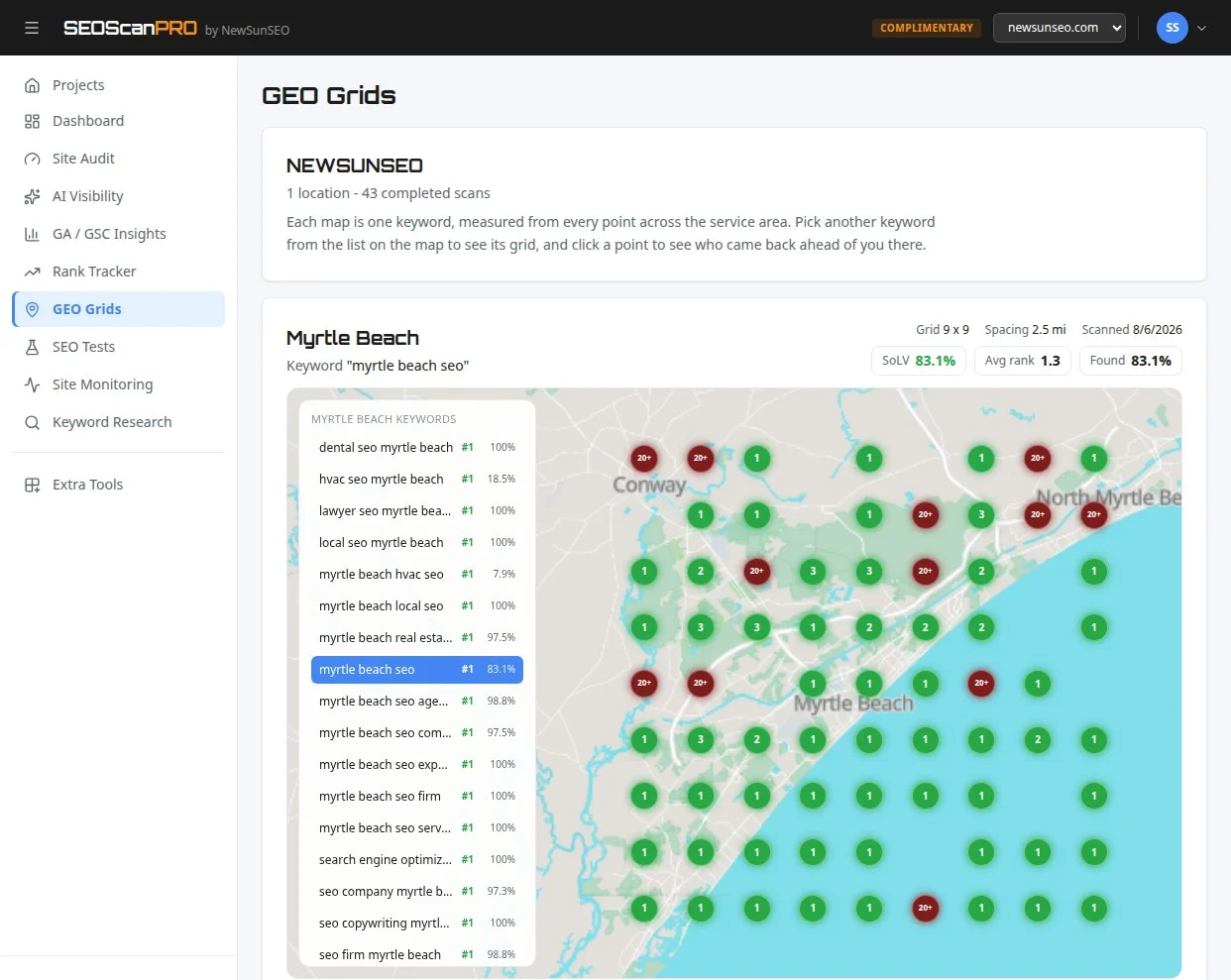
SEOScanPro runs a full technical audit of a site and shows the measured result behind every check. Open the geo grid tool.
Sources
See our editorial disclaimer for how our articles are produced.
Run a free scan to see your AI Visibility Score, SEO rating, and local citation accuracy.