
Google has confirmed that its disavow tool still produces measurable effects in search, while restating that most websites have no reason to use it. The clarification helps clarify a long-running debate in SEO about whether submitting a disavow file is a ranking fix or a waste of effort.
What Google Said About the Disavow Tool
In a Reddit thread, a Google search relations lead wrote: “There’s a lot of hate on the disavow tool here, but it has its place & time, it does have effects.” The post was a direct reply to a site owner who reported a sudden search drop after submitting links to the disavow file, including links purchased from a guest post and link marketplace.
The same response added that “disavowing a handful of links is not going to make your site drop out of search,” pointing away from the disavow file as the trigger and toward broader algorithmic or technical causes.
What Google Recommends Before Disavowing
Rather than treating the disavow file as a fix-all, the advice was to first review what the file actually contains and whether it reflects what the site truly needs.
The two-step recommendation:
- Fix the disavow file so it only contains the entries that genuinely need to be there. An empty file is sometimes the right answer.
- Look for other reasons the site could have dropped, including a recent broad spam update, since recovery from larger algorithmic shifts can take many months.
Technical issues were flagged as another common cause, not small mistakes like an incorrect canonical tag, but larger problems such as accidentally blocking the entire site from crawling.
When the Disavow Tool Actually Applies
Google has historically held that the disavow tool is unnecessary for the vast majority of sites. Past statements have called disavowing links a waste of time for most publishers, and the company has also said the tool hurts more sites than it helps. Bing has suggested the disavow tool may eventually be removed, and Google has doubled down on telling site owners not to use it casually.
The new statement does not change that stance. Instead, it narrows the use case: the disavow tool has a place and a time, but only in specific situations, typically when a site has built or accumulated unnatural links that it cannot remove on its own.
How to Decide Whether to Submit a Disavow File
Run these checks before opening the file.
- Confirm there is a real, documented history of spammy or purchased links that cannot be cleaned up by contacting webmasters.
- Check the timeline of the search drop against known algorithm updates, especially spam updates, which can produce sudden ranking changes.
- Audit the technical health of the site, including crawl access, server responses, and accidental noindex or robots.txt blocks.
- Only after these steps should the disavow file be opened, and the list trimmed to the entries that match a clear pattern of low-quality links.
An audit of the site’s backlink profile and overall technical health can surface the real cause of a ranking drop, and SEOScanPro’s full site audits surface the measured result behind each check, including backlink signals and crawl issues.
What Recovery Looks Like
Even when the disavow file is the right move, results are not instant. The response noted that fixes tied to broader algorithmic changes can take many months to show effects in search. That delay often pushes site owners to keep adding to the disavow file in the hope of faster recovery, which is usually counterproductive.
A cleaner approach is to keep the disavow list minimal, address technical issues that are easier to fix, and wait for the next algorithm cycle to reassess the site’s link profile.
FAQ
Does the Google disavow tool still work in 2026?
Yes. Google confirmed that the disavow tool still produces effects when used, but stated that it has a narrow use case and is not needed by most websites.
Should most sites use the disavow tool?
No. Google has repeatedly said that most site owners should not disavow links, and has warned that the tool hurts more sites than it helps when used without a clear reason.
Why did a site lose rankings after submitting a disavow file?
Google said the drop is likely tied to a broad spam update or a large technical problem, and recovery from such changes can take many months. Disavowing a small number of links is unlikely to be the cause.
SEOScanPro
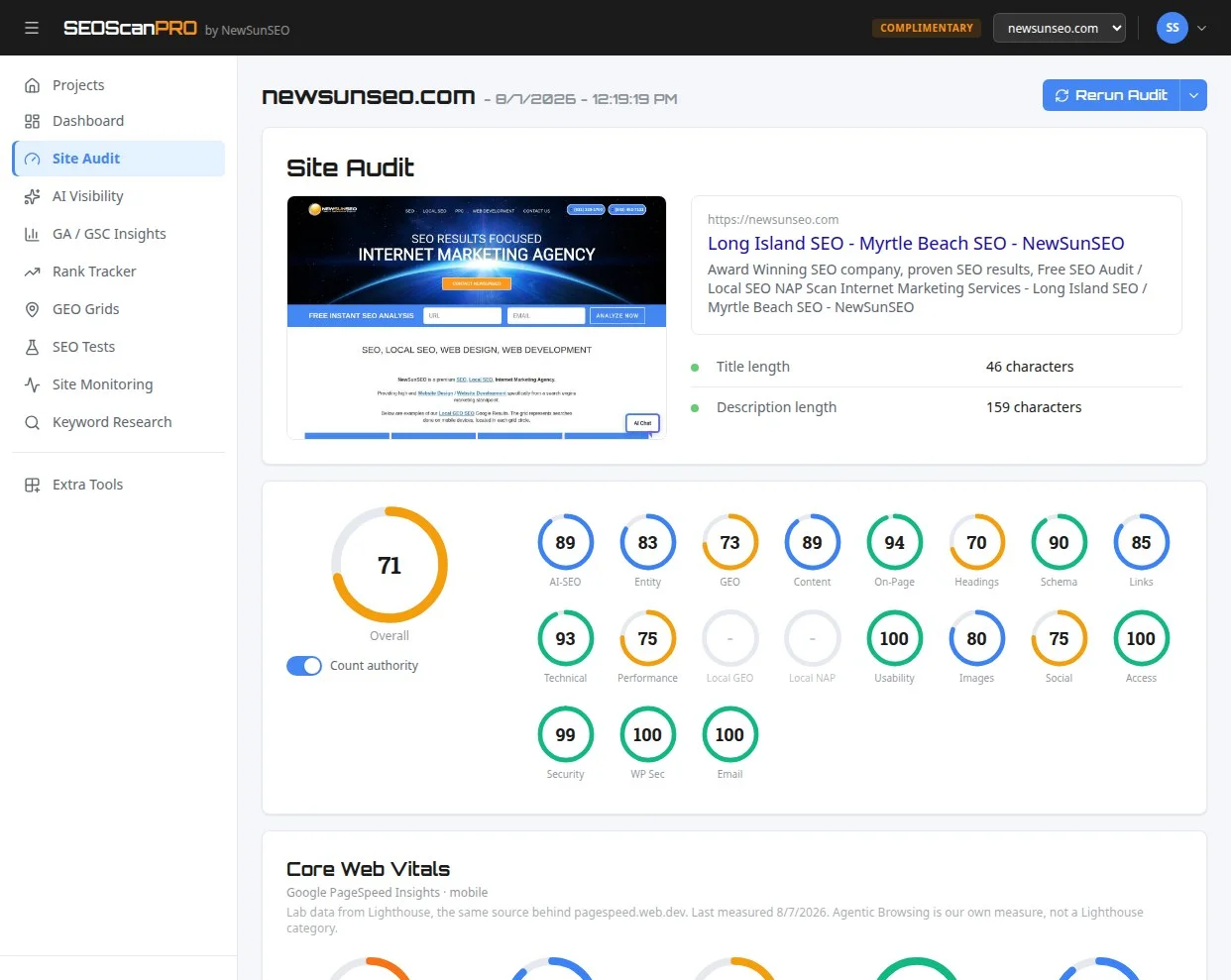
SEOScanPro runs a full technical audit of a site and shows the measured result behind every check. Open the site audit tool.
See our editorial disclaimer for how our articles are produced.
Run a free scan to see your AI Visibility Score, SEO rating, and local citation accuracy.