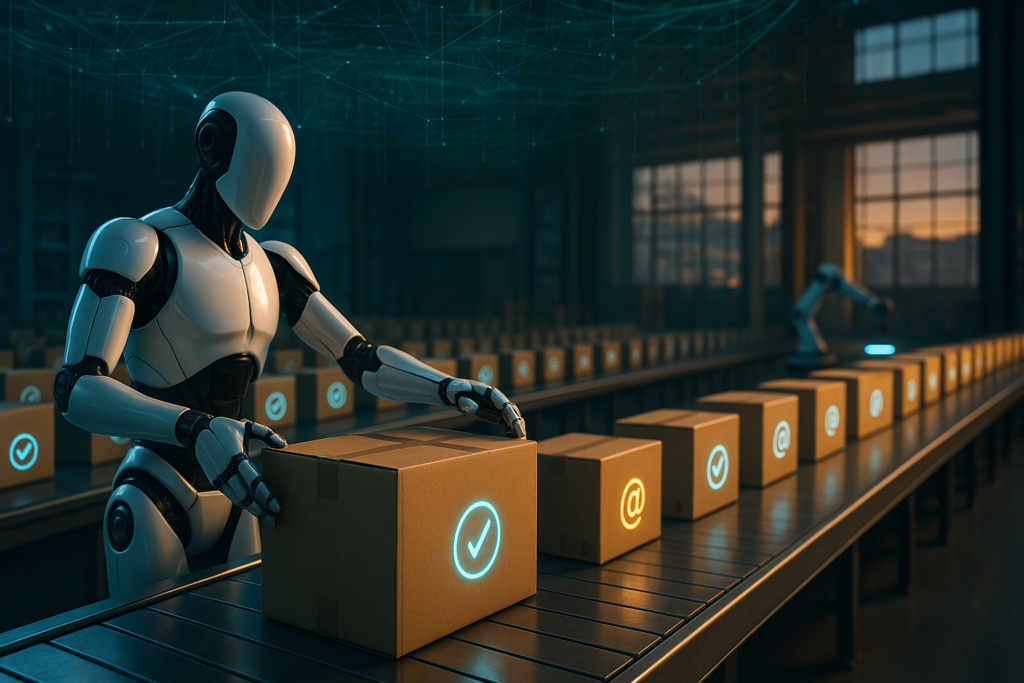
Figure AI’s Figure 02 humanoid robot completed 200 consecutive hours of autonomous physical work inside a simulated logistics environment, with no remote control and no human intervention. The run, detailed in a company test report published this week, included more than 28,000 pick-and-place cycles, a 99.4% task-completion rate, and over 120 miles walked. It marks a shift from short lab demos to shift-length autonomous labor in real-world settings.
Why does a 200-hour run matter?
The global push to automate physical labor has accelerated as companies face workforce shortages, rising e-commerce demand, and pressure to cut operational costs. The International Federation of Robotics projects that humanoid robots could number over 1.5 million units worldwide by 2035, moving from niche R&D to integration in logistics, manufacturing, and retail. For decades, humanoid robots struggled with runtime, most could sustain only short demonstrations before needing a battery swap or human assistance. A 200-hour continuous demonstration flips that narrative, showing embodied AI can survive the grind of multi-day shift work common in warehouses and factories.
How did Figure 02 run for 200 hours straight?
Figure’s latest test placed its humanoid, the Figure 02 model, inside a climate-controlled mock logistics center filled with standardized storage bins, conveyor belts, and pallet racks. The robot was tasked with a loop of repetitive yet precise physical activities: picking items from bins, placing them into totes, walking between stations, scanning barcodes, and managing its own battery through autonomous docking and recharging cycles. No human operator intervened; the robot’s onboard AI, powered by neural networks trained on thousands of hours of synthetic and real-world demonstration data, handled full task planning, error recovery, and energy management.
The endurance run depended on a combination of efficient power consumption, hot-swappable battery packs, and proactive self-monitoring algorithms that predicted energy state and moved to a charging dock before depletion. Figure’s engineering team also employed a proprietary end-effector design that maintained grip reliability across millions of cycles without slip or breakage. These technical choices allowed the robot to hold a 99.4% task-completion rate across the entire 200-hour window.
What did the test actually measure?
Headline metrics from the endurance test, as reported by Figure AI’s 200-Hour Endurance Test Report:
- 200 hours of continuous operation, equivalent to 25 eight-hour workdays run sequentially.
- More than 28,000 successful pick-and-place cycles, handling a total payload exceeding 12,000 kilograms.
- 99.4% task-completion rate, with only 0.6% of cycles requiring an automatic retry due to slip or docking misalignment, fully resolved without external help.
- Over 120 miles walked by the robot inside the test space, proving locomotive stability on a variety of floor surfaces.
- Zero handoffs to remote operators; all error recovery was handled by the robot’s onboard planning stack.
The endurance test marks the first time a humanoid robot has autonomously sustained a full workweek of repetitive physical tasks without human intervention, moving the conversation from what robots can do to what they can replace.
What comes next for Figure 02?
Figure’s immediate roadmap moves the same hardware into live pilot deployments. BMW, an early partner, has been testing Figure 02 for material handling at its Spartanburg plant; scaling the 200-hour capability to an automotive assembly line with more complex manipulation is the next step. The company is also working on team-level coordination, multiple humanoids sharing a task queue, dynamically reallocating work based on battery state and location, as well as safety certification for co-working environments alongside human employees.
Beyond factory walls, extending the runtime to time-constrained settings like last-mile delivery depots or large-scale retail stocking will be the true proving ground. With endurance solved, the next bottlenecks are manipulation dexterity and generalization to new product types on the fly.
What does this mean for your business?
Physical autonomy at this scale will ripple far beyond the Fortune 500 plant floor. Small and mid-size logistics operations, fulfillment centers, and even retail chains will see humanoid robot leasing models emerge, much like today’s warehouse IoT. While the cost curve is still steep, the 200-hour milestone signals that the technology is moving from science project to producible machine.
For business owners watching the AI-automation landscape, this test parallels advances in agentic AI we’ve tracked on the software side. Just as agentic AI systems are starting to book appointments and execute tasks on their own, physical "agents" are learning to carry boxes, restock shelves, and run a full week without a coffee break. The trends converge when a software agent spots a low-stock alert and a humanoid handles the replenishment without a human in the loop. Similarly, the ramp in AI-powered autonomy discussed at Google I/O 2026 underscores that robots are receiving the same kind of intelligent decision-making layer that search agents now enjoy. None of this rewrites your business overnight, but it’s a signal that the window to plan for embodied automation is opening.
What is the bigger picture here?
Embodied AI is finally learning to survive the real world’s most boring test: time. Figure’s 200-hour run isn’t a sci-fi demo; it’s a warranty. When a humanoid robot can match the endurance of a human shift week after week, the economic equation for physical labor changes from "someday" to "soon."
Sustained 200-hour operation proves embodied AI can handle full workweeks without human intervention.
FAQ
How did Figure 02 stay running for 200 hours without human help?
Figure 02 combined efficient electric actuation, hot-swappable battery packs, and self-monitoring algorithms that predicted energy depletion. The robot autonomously walked to a charging dock, swapped batteries, and resumed work, while a proprietary gripper design prevented mechanical failure and onboard routines handled the rare slip or docking misalignments.
What tasks did the robot actually perform during the test?
Inside a climate-controlled mock logistics center, the robot picked items from storage bins, placed them into shipping totes, walked between stations, scanned barcodes, and packed containers. It repeated these cycles for 200 hours, completing more than 28,000 successful pick-and-place cycles and moving over 12,000 kilograms of product.
Is Figure 02 ready for commercial deployment?
Figure is already piloting Figure 02 at BMW’s Spartanburg plant for material handling, and the 200-hour result proves shift-length endurance. Commercial rollout still requires safety certification, generalization to unstructured environments, and cost reductions, with small-scale deployments in controlled logistics settings targeted within the next two years.
Sources
- Figure AI 200-Hour Endurance Test Report
- International Federation of Robotics
Run a free scan to see your AI Visibility Score, SEO rating, and local citation accuracy.