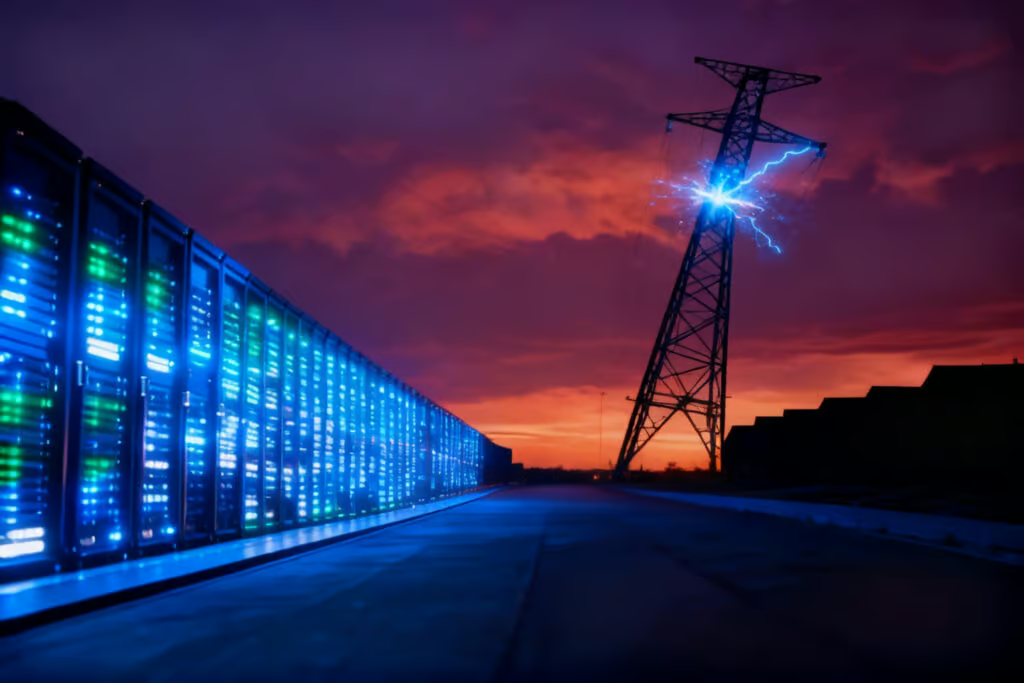
The Eastern Interconnection, the largest synchronized power grid in North America, is projected to exhaust its emergency peak power reserves by June 2027. Without a sudden surge in generation or a steep drop in demand, the grid’s final safety buffer will hit zero in midsummer, forcing operators to institute controlled rolling blackouts to prevent a total system collapse.
The forecast comes from recent energy reliability analysis showing the reserve margin narrowing summer after summer, driven by aging baseload retirements, slow additions of dispatchable generation, and climbing demand from data centers and electrification. A typical summer demand curve is expected to overwhelm available supply, leaving no headroom for any additional stressor.
Why Does the Eastern Interconnection Matter?
The Eastern Interconnection links generating stations and high-voltage transmission lines from the Great Plains to the Atlantic seaboard, powering factories, data centers, hospitals, and millions of homes. Operators maintain a tiered set of reserves to keep the system stable. Emergency peak reserves are the deepest tier, tapped only when extreme demand threatens to outstrip supply during events like a prolonged heat wave or a major plant trip. Losing that buffer leaves the grid one unplanned outage away from uncontrolled blackouts that could cascade across state lines.
For businesses that depend on always-on connectivity, from e-commerce storefronts to cloud-hosted AI services, the risk extends beyond inconvenience. Payment processing halts, customer data becomes unreachable, and real-time operations grind to a stop. The June 2027 projection turns a once-distant infrastructure worry into a tangible operational risk demanding preparation now.
What Is New in This Forecast?
The forecast stands out because it charts a steady erosion of capacity rather than a single shock event. As older coal and nuclear plants retire and demand rises, the buffer between supply and peak load shrinks every year. By June 2027, the arithmetic no longer works, and emergency reserves designed to cover the gap between available supply and peak load will be gone once demand response, imported power, and spinning reserves have all been deployed. The only remaining lever is to shed load deliberately, cutting power to specific areas in rotating blocks.
What Are the Key Numbers?
- June 2027: The projected month when the Eastern Interconnection’s emergency peak reserves are expected to reach zero, forcing utilities to plan for rotating outages.
The Eastern power grid, once a silent utility, is now a countdown clock, and the alarm is set for June 2027.
What Comes Next for Utilities and Regulators?
Utilities and federal regulators are likely to accelerate permitting and construction of fast-ramp generation, grid-scale battery storage, and expanded demand response programs. New transmission corridors capable of importing power from regions with surplus capacity will receive fresh urgency, though large infrastructure projects often take years to move from planning to operation. In the interim, commercial and industrial users are being encouraged to enroll in interruptible-rate programs that compensate them for reducing consumption during tight hours.
The tension between growing digital infrastructure and constrained power is already visible in local disputes. In Sterling, Virginia, the noise and emissions from backup generators at a Vantage Data Center facility triggered community complaints, an example of how the grid’s fragility ripples into neighborhoods as data centers install ever-larger on-site power to protect their operations from that same fragility.
What Does This Mean for Your Business?
For business owners whose revenue depends on internet-facing services, AI toolchains, or cloud-hosted platforms, a grid emergency is a business continuity event. Running out of emergency reserves does not guarantee every business loses power, but it makes rotating outages far more likely, and those blackouts will be dispatched with little warning. Now is the time to identify which parts of your operation absolutely require uninterrupted power and build a layered resilience plan.
Practical steps include investing in an uninterruptible power supply (UPS) to bridge short outages, arranging a fixed backup generator with adequate on-site fuel storage, and evaluating whether critical workloads should be replicated in a colocation facility with its own dedicated power feeds. Remote teams should establish a communication plan that does not rely on a single cell tower or home internet connection. For AI inference or training jobs that cannot be paused mid-run, talk to your cloud provider about multi-region availability and the backup power guarantees in their data center service level agreements. A blackout plan is no longer a footnote; it is as essential as a cybersecurity incident response plan.
What Is the Bigger Picture?
The Eastern grid’s countdown to June 2027 is a stark reminder that the digital economy rests on a physical foundation that is aging and underinvested. Power reliability, once taken for granted, now demands the same strategic attention as software uptime and supply chain resilience. No single business can fix the transmission system, but every operator can harden their own operations against the inevitable stress. The companies that begin now will be the ones that stay online when the reserve margin finally hits zero.
The Eastern power grid, once a silent utility, is now a countdown clock, and the alarm is set for June 2027.
FAQ
What is the Eastern Interconnection?
The Eastern Interconnection is the largest synchronized power grid in North America, stretching from the Great Plains to the Atlantic coast. It links thousands of generating plants and high-voltage transmission lines that deliver electricity to a wide swath of the U.S. economy, with operators coordinating continuously to balance supply and demand.
What are emergency peak reserves?
Emergency peak reserves are the last tier of backup generation capacity grid operators can call upon. They sit below spinning reserves and contingency reserves and are used only when all other measures have been exhausted during extreme demand events. If those reserves run out, the grid must initiate controlled rolling blackouts to prevent widespread failure.
How should businesses prepare for potential blackouts?
Businesses should treat a grid emergency as a business continuity risk by identifying critical loads, investing in a UPS for short outages and a properly sized generator with fuel for longer ones, and considering replication in a colocation facility with dedicated power feeds. Remote teams need a communication plan that does not rely on a single tower or home internet connection, and customers relying on real-time AI workloads should review their cloud provider’s data center backup power guarantees.
Run a free scan to see your AI Visibility Score, SEO rating, and local citation accuracy.