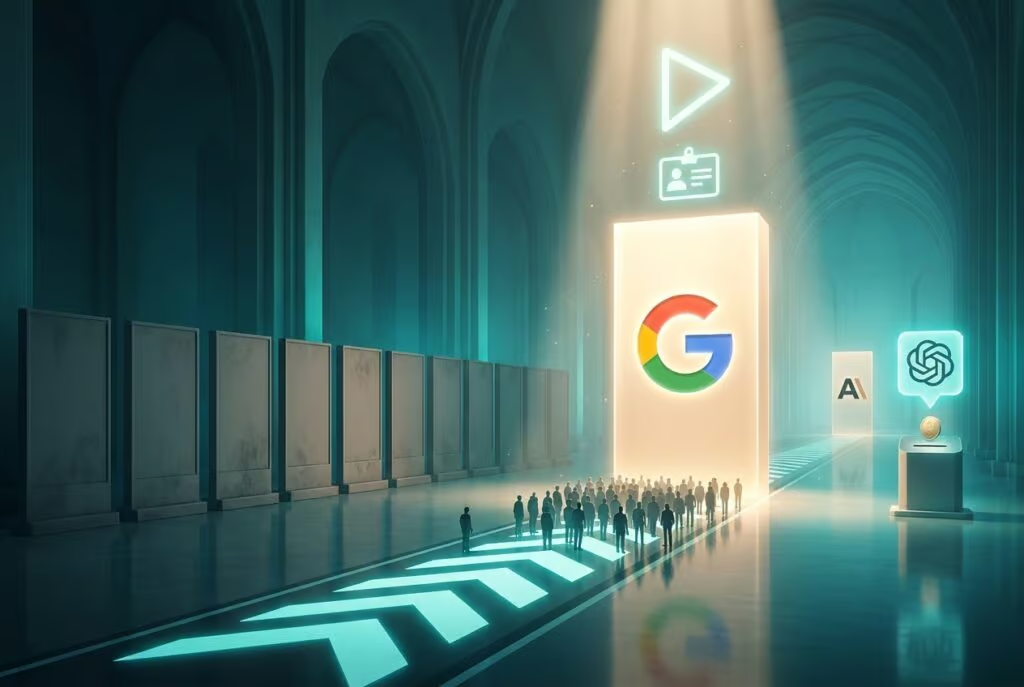
A new AI search user behavior study found that 88% of users accept what Google’s AI Mode hands them and never scroll to compare sources. In the older AI Overviews format, users scroll backward to comparison-shop roughly 50% of the time. The gap has direct consequences for any business trying to be found: in AI Mode, the source the model cites is very often the only source the buyer ever sees.
Why It Matters
For two decades, search was a comparison engine. A buyer typed a query, saw ten blue links, and clicked around before deciding. That browsing behavior gave smaller businesses a shot: you didn’t have to be ranked #1, you just had to be on the page and worth a click.
AI Mode collapses that. When 88% of users take the answer as-is, the funnel narrows from “ten options the buyer weighs” to “one to three sources the model decided to trust.” Google has confirmed that AI features in Search now reach more than a billion people, so this is not a fringe behavior pattern; it is becoming the default way people search. If your business is not in the citation set, you are not in the consideration set.
What’s New / How It Works
The behavioral split is the headline, but it ties to a broader shift in where AI models pull their sources. The standout: LinkedIn has climbed to the #2 most-cited source in AI answers, behind only YouTube. That is a structural signal, not a fluke. Models favor sources with clear authorship, consistent entity data, and content that reads as first-hand expertise rather than commodity copy.
It works like this. AI Mode runs a “query fan-out”: it breaks your question into several sub-queries, retrieves passages from a handful of trusted sources, and synthesizes one answer. The model is biased toward sources it can verify and attribute. A YouTube video has a named channel; a LinkedIn post has a named professional and a job title. A thin, anonymous web page has neither. The reason generic content keeps losing in AI answers is the same reason it loses citations, as we covered in Google’s warning about generic content.
On the paid side, two changes matter for operators running ads. ChatGPT is rolling out pay-per-conversion ads, so advertisers can pay on outcomes rather than clicks inside a conversational surface, the first real ad inventory inside an AI assistant. Google is also reshaping its own ad and data stack underneath everyone’s feet.
The Numbers
- 88% of users accept AI Mode results as-is, without comparison-browsing.
- ~50% of users scroll backward to compare sources in the older AI Overviews format.
- #2, LinkedIn’s rank as an AI citation source, behind only YouTube.
- 37 months, the new retention window after which Google Ads begins deleting hourly, daily, and weekly granular data, starting June 2025.
- January 2027, the deadline by which standard Display campaigns migrate into Demand Gen.
- Pay-per-conversion, the pricing model for ChatGPT’s incoming ad units.
“In AI Mode, people aren’t shopping the page anymore, they’re taking the answer. If you’re not the source it cites, you don’t exist in that search.”
When 88% of searchers accept the AI’s answer untouched, being the cited source stops being nice-to-have and becomes the whole game.
What Comes Next
When does Google Ads start deleting older granular data?
The data-retention change is the quiet one with real teeth. Starting June 2025, Google Ads deletes granular hourly, daily, and weekly reporting older than 37 months. If you rely on multi-year seasonality comparisons, export that historical data now, because once it’s gone, your year-over-three lookbacks go with it.
What is the Google Demand Gen migration deadline?
By January 2027, standard Display campaigns fold into Demand Gen, Google’s AI-driven, goal-based format that spans YouTube, Discover, and Gmail. Manual placement control shrinks; outcome signals and creative quality matter more. The pattern is the same across platforms:
“The platforms are all moving the same direction, you feed the machine clean signals and good creative, and it decides the rest. Your job is the inputs, not the dials.”
Expect the ChatGPT ad rollout to accelerate the same pattern: conversational surfaces that blend organic citations and paid placement, where being a trusted, verifiable entity is the price of admission to both. You can see Google’s direction in its own Search product announcements.
What This Means for You
Stop optimizing for clicks you may never get and start optimizing to be the source the model trusts. Three moves, in order of leverage.
First, fix your discoverability fundamentals. AI models reward businesses with consistent, verifiable entity data: a claimed listing, accurate NAP, and clear categories. If an AI can’t confirm who you are and how to reach you, it won’t cite you. Run a check on your own footprint with AI contactability, then claim and standardize your listing so the data the model reads is the data you control. Inconsistent business listings are the single most common reason a real, reachable business gets skipped.
Second, build authorship into your content the way LinkedIn and YouTube do. Named experts, first-hand experience, and specifics over commodity copy. Refreshing your strongest pages beats publishing more thin ones, and the audit playbook is in our piece on refreshing content to win AI visibility.
Third, keep your off-site presence active and consistent across the social and professional profiles models increasingly cite. Tools like Feedsta.ai, an AI social media manager that creates, schedules, and analyzes posts across platforms, help keep your brand visible and current wherever customers and AI agents look. Consistency is itself a trust signal.
The Bigger Picture
The web is shifting from a place people browse to a place machines summarize, and an 88% acceptance rate is the clearest measure yet of how complete that shift has become. The winners won’t be the businesses that chase every algorithm tweak; they’ll be the ones an AI can identify, verify, and confidently quote. Make your business easy to cite, and you stay in the answer no matter which surface the buyer is searching from.
FAQ
What did the AI search behavior study find about AI Mode?
The study found that 88% of users accept Google’s AI Mode results as-is without scrolling to compare other sources, while in the older AI Overviews format, users scrolled backward to comparison-shop roughly 50% of the time. The practical takeaway: AI Mode collapses the old comparison-shopping funnel, so the source the model cites is often the only one the buyer ever sees.
Why is LinkedIn the #2 most-cited source in AI answers?
LinkedIn ranks #2, behind YouTube, because AI models favor content with clear authorship and verifiable expertise. A LinkedIn post carries a named professional and a job title; a YouTube video carries a named channel. Anonymous, generic web pages offer neither, so models trust and cite them less.
How can a business get cited in AI Mode results?
Claim and standardize your business listing so your name, address, phone, and categories are consistent everywhere. Build named authorship and first-hand expertise into your content rather than generic copy. Keep your social and professional profiles active and current. Citation favors businesses that are easy to identify, verify, and quote.
Run a free scan to see your AI Visibility Score, SEO rating, and local citation accuracy.