Gary Slaughter
Contact Information
-
Address
Myrtle Beach, SC, SC, 29572 -
Phone
(704) 364-6110 -
Website
garyslaughter.com
Location
About Gary Slaughter
Gary Slaughter is a health care facility in Myrtle Beach, SC. The facility serves individuals in need of medical care, with a focus on specialized services related to veteran health and historical trauma. It is recognized for its high level of care, reflected in a 5.00 rating from one verified review. The facility operates within the broader community of Myrtle Beach and provides services to residents and visitors across the region.
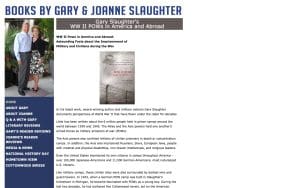
Gary Slaughter is also the author of *WW II POWs in America and Abroad*, a work detailing the imprisonment of military personnel and civilians during World War II. The book highlights lesser-known aspects of the war, including the internment of over 100,000 Japanese-Americans and 11,500 German-Americans within the United States. His interest in POWs began in childhood when a German POW camp was established in his hometown of Owosso, Michigan. He served as a naval officer during the Cold War and later authored five award-winning Cottonwood novels set on the American home front during World War II. His writings often incorporate POW narratives, drawing from extensive research and personal experience. He has also contributed to historical education through participation in National History Day, supporting a high school student’s project on the Cuban Missile Crisis.
The facility is located in Myrtle Beach, SC, serving the local community with specialized health care services. It is situated in a residential area of the city, near the Myrtle Beach Convention Center and the Broadway at the Beach shopping and entertainment complex. It is accessible via U.S. Route 17 and lies within a short drive of the city’s central business district.
Gary Slaughter stands among the strongest in its category locally, known for its commitment to veteran care and historical awareness. The facility’s reputation is built on specialized service, community engagement, and a focus on underrepresented histories in military and civilian health. Its work reflects a deep dedication to preserving the experiences of those affected by wartime incarceration. The facility’s presence in Myrtle Beach underscores its role in supporting local health needs with a unique historical perspective.
More Businesses in Myrtle Beach, SC
- CNT Foundations of Myrtle BeachBizScore 86
- Mosquito Squad of Myrtle BeachBizScore 86
- LifeStance Therapists & Psychiatrists Myrtle BeachBizScore 85
- Nouveau Dermé Aesthetic CentreBizScore 85
- Skylift Garage Doors of Myrtle BeachBizScore 84
- Roper St. Francis - ATI Physical Therapy - West Ashely - Savannah Hwy of Myrtle BeachBizScore 84
- AT&T Store of Myrtle BeachBizScore 84
- BrickWood Mortgage, Inc. of Myrtle BeachBizScore 84
- Joye Law Firm Injury Lawyers of Myrtle BeachBizScore 83
- Undergrads Moving | Movers Myrtle Beach SCBizScore 83