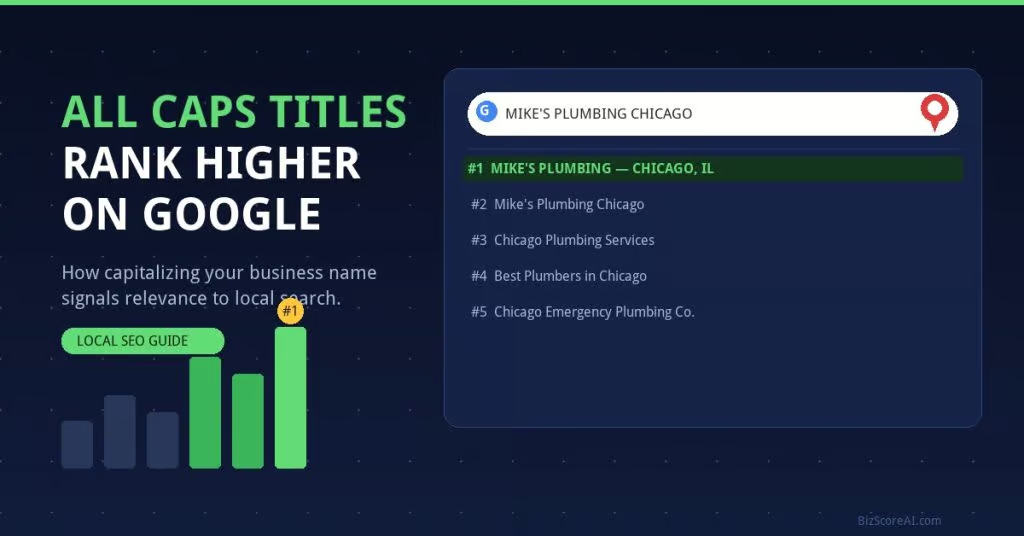
A split test shows that writing page titles in ALL CAPS increased mobile organic traffic by 17.5%. Google normalizes capitalization in visible results, so the boost isn’t visual; it comes from NATURAL LANGUAGE PROCESSING, where capitalized terms carry stronger semantic weight during indexing. For local businesses, that signal changes how every listing, headline, and tag should be written.
How does capitalization affect how Google indexes a page?
The same AI models behind GOOGLE SEARCH, GOOGLE MAPS, and GOOGLE BUSINESS PROFILE were trained on billions of documents where ALL CAPS marks importance: product labels, news headlines, and legal notices. When a website title or business listing uses capitalization strategically, those models assign higher semantic weight to the terms, which can translate directly into ranking improvement.
The split test confirmed it with measurable data: 17.5% more mobile traffic from pages whose titles used ALL CAPS for key terms. Google didn’t show the caps to users, but it read them during indexing.
What this means for your business listings
Your GOOGLE BUSINESS PROFILE, website title tags, blog post titles, and even your YELP and BING PLACES descriptions all feed the same NLP system. How you write your business name, services, and location shapes how Google’s models weight your relevance for local searches.
This is where BIZSCOREAI comes in. Your BizScore measures how consistently and completely your business information appears across the web. Businesses with high BizScores have:
- Consistent NAME, ADDRESS, AND PHONE (NAP) across all directories
- Keyword-rich business descriptions that match how customers search
- Optimized title and category signals on every platform
The ALL CAPS title technique is one more lever, now backed by real split-test data.
Why consistency and capitalization multiply as an entity signal
Google doesn’t just rank pages. It builds an understanding of your business as an ENTITY, a node in its knowledge graph. Your business name, location, category, and descriptions across the web form a pattern that either strengthens or weakens your entity authority.
When your entity signals are:
- Consistent: same name and address everywhere
- Keyword-optimized: describing what you do and where
- Emphasis-signaled: using capitalization for core terms
…Google’s confidence in your business grows, and local rankings follow.
How to apply this to your business this week
- Update your website title tags: use ALL CAPS for your core service + city, e.g.,
PLUMBER MYRTLE BEACH SC | YOUR COMPANY. - Check your BizScore: run a free audit at BizScoreAI to find listing gaps and inconsistencies.
- Optimize your GBP description: include your service and city in the first sentence, capitalized.
- Monitor Google Search Console: track mobile CTR before and after title changes over 30 days.
The BizScoreAI advantage
BIZSCOREAI monitors your LISTING CONSISTENCY SCORE across dozens of directories, including Google, Yelp, Bing, Apple Maps, Facebook, and more. A single inconsistency in your NAP data, a missing category, or a weak business description reduces your entity authority and caps your ranking potential.
The ALL CAPS study is a reminder that EVERY TEXT INPUT TO GOOGLE IS A DATA POINT. Your listings aren’t just contact information; they’re NLP training data for the algorithm that decides whether customers find you or your competitor.
Get your free BizScore audit at BizScoreAI.com and see exactly where your entity signals are weakest.
FAQ
Do ALL CAPS title tags actually improve rankings?
According to the cited split test, yes. Pages whose titles used ALL CAPS for key terms saw 17.5% more mobile organic traffic. Google normalizes capitalization in displayed results, but the NLP engine assigns higher semantic weight to capitalized terms during indexing.
Why does Google care about capitalization if it doesn’t display it?
Google’s natural language processing models were trained on documents where ALL CAPS marked importance, such as product labels, news headlines, and legal notices. Treating capitalized terms as semantically significant is built into how those models read text.
Where should local businesses use ALL CAPS for SEO?
The post recommends using ALL CAPS in website title tags (core service + city), Google Business Profile descriptions (service and city in the first sentence), and other listing fields on Yelp and Bing Places that feed the same NLP system.
Related coverage
Run a free scan to see your AI Visibility Score, SEO rating, and local citation accuracy.